



Understanding the Aging Mouth: 4 Core Changes
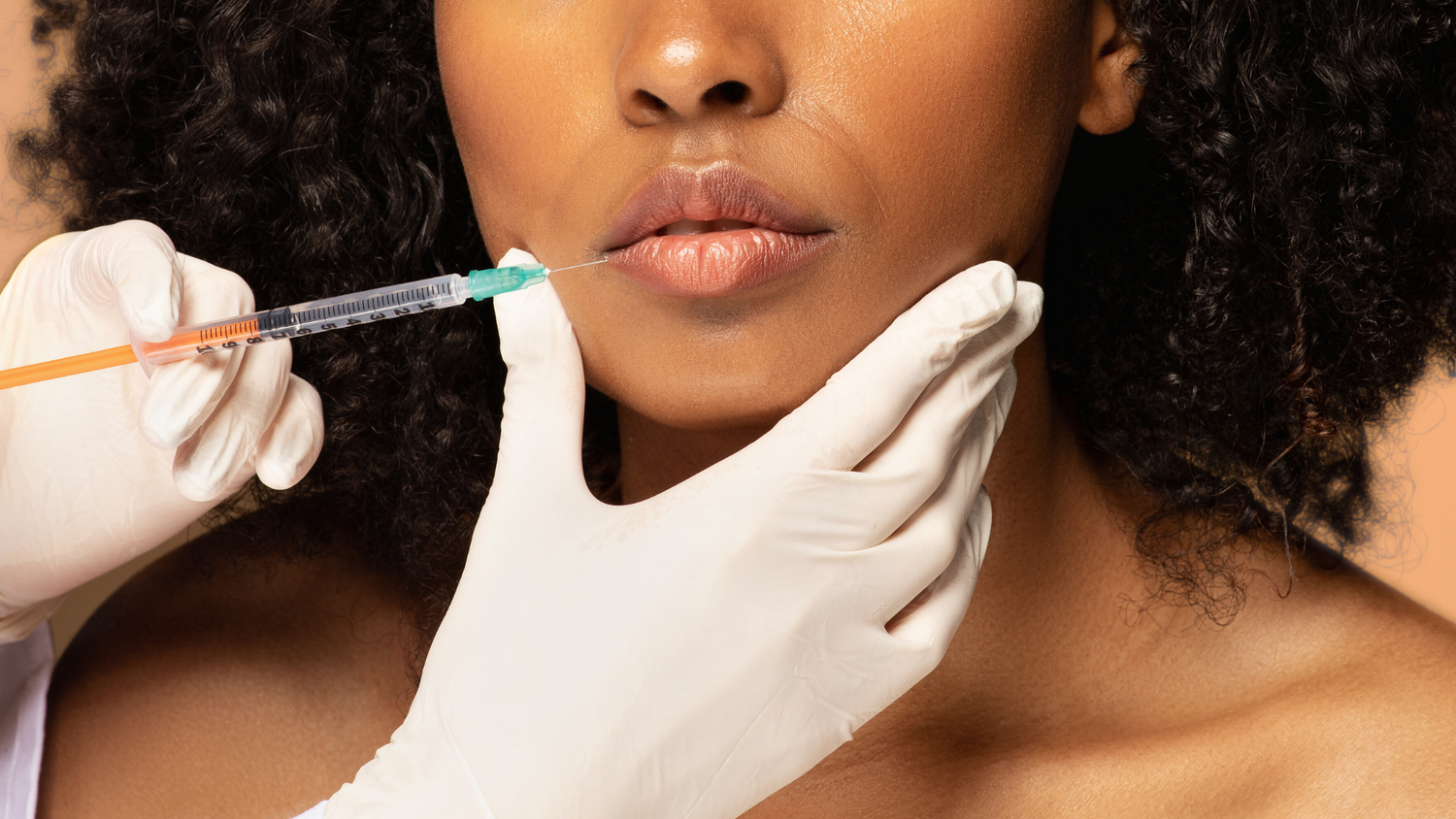
While lip fillers often promise quick fixes, they rarely address the deeper structural and anatomical changes that occur with age. To understand how to truly restore a natural-looking mouth, it helps to first look at the specific ways the area evolves over time.
01. Lip Elongation
One of the earliest and most significant changes is the elongation of the upper lip. In youth, the upper lip typically measures 13-15 mm, but after our late 40s to early 50s, this can lengthen to 18-22 mm. This elongation causes:
- A flatter smile
- Inversion of the red lip
- Loss of dental show (the visibility of your top teeth when smiling)
- Formation of a horizontal crease across the upper lip
02. Volume Loss in the Lower Face
Aging isn't just about losing lip volume. The entire perioral area (under the nose, around the lips, chin, and pre-jowl areas) undergoes fat loss and bone resorption in the jaw. This results in:
- Deflated lips
- Hollowing around the mouth and chin
- Loss of definition and support
03. Skin Creasing Around the Lips
The skin around the mouth thins and loses resilience. As the muscle around your mouth repeatedly contracts, it pulls this fragile skin inward, gradually etching deeper lines into the surface. This process contributes to:
- Vertical lip lines, often called "smoker's lines" (regardless of smoking history)
- Fine creases and deep wrinkles
- Crepey texture and skin laxity
04. Adjacent Structural Changes
Aging cheeks descend and crowd the mouth area, contributing to:
- Nasolabial folds (smile lines)
- Marionette lines (creases from corners of mouth to chin)
- Downturned mouth corners (due to muscle imbalances)
By rejuvenating this area, we restore not only youthful balance to your features but also the harmony between your appearance and your identity.


15 comments
Diane Paletz
Dr. Karam, I am long overdue in writing you because not a day goes by when I don’t think of you in deep gratitude for making me look as young as I feel and the education I have gotten from your videos and social media platforms. I had a halo laser when I did my facial rejuvenation and again about 6 months this
ago. Each time I broke out in a horrible flare up of this
Perioral dermatitis, so that procedure is no longer in the cards for me. The Trifecta is absolutely a game changer and I have used it religiously (except during those flareups when medication was the intervention) next. That said. I am moving toward 76, and I am consistently complimented on how well I look and how great my skin looks. Thank you, Dr. Karam!
So, when you talk about tiny amounts of filler in those smoking lines. what type of filler do you recommend and is there a particular laser procedure that you feel would not be so intrusive and yet, would
give me some good results.
With deep and ongoing gratitude, Diane
———
KaramMD Skin replied:
Hi Diane—Thank you so much for this incredibly kind and heartfelt message, it truly means a lot to Dr. Karam, and we’ll be sure to pass along your gratitude. We’re so glad to hear the Trifecta has made such a meaningful difference for you, and it’s wonderful that your skin and results speak for themselves at any age! Regarding your questions about filler type and a less invasive laser option for your smoking lines — given your history with Perioral Dermatitis flare-ups after Halo, this is really something a provider would want to assess personally before making any specific recommendations. Every case is different, and with your history, a tailored plan matters even more. We’d recommend booking a consultation with a trusted provider directly so they can review your history and give you guidance that’s specific to you. Thank you again for being part of this journey with us, messages like yours make it all worthwhile!
Cynthia Cabaza
Dr. Karam,
I recently read your article on why lip lines are so difficult to treat, and it brought up a question regarding fat transfer longevity.
When I consulted with you before my vertical facelift in August 2023 my understanding was that the fat transfer to my face and hands would provide long-lasting, potentially lifetime, volume. I was very pleased with the facelift.
However, I have been disappointed with the loss of volume. Within about a year and a half, it seems that much of the transferred fat in my face and hands was gone. Since then, I have been trying to restore volume conservatively with PRF treatments rather than fillers. My temples have become hollow again, my lips have lost volume, and I am now seeing more vertical lip lines and volume loss around my mouth.
One thing I have not done is take any GLP-1 medications such as Ozempic or similar weight-loss drugs, so I do not believe medication-related weight loss contributed to the fat loss.
I also wanted to share some feedback regarding follow-up care. After surgery, I only had one virtual follow-up appointment. Given the investment I made in the procedure, I would have appreciated a six-month in-person evaluation or additional follow-up to assess the longevity of the fat transfer and discuss any concerns. The surgical result itself was excellent, but the follow-up experience left me feeling somewhat overlooked.
I am not writing to complain, but rather to better understand why the fat transfer may not have lasted as expected and whether this degree of volume loss is typical in your experience.
Thank you for your time, and I look forward to hearing your thoughts.
———
KaramMD Skin replied:
Hi Cynthia—Thank you so much for taking the time to share your experience and for your thoughtful, candid feedback. It means a great deal that you reached out, and your questions are completely understandable given the investment you made. We want to make sure all of your concerns — about fat transfer longevity, your current volume loss, and your follow-up experience — are addressed thoroughly and with the attention they deserve. The best way for us to do that is to connect you directly with Dr. Karam’s clinical staff, who are best positioned to review your specific situation and discuss the right path forward for you. Please don’t hesitate to reach out to the clinical team directly at need her information and ask her to email it to postop@drkaram.com. They will be happy to speak with you, answer your questions, and schedule any appropriate follow-up.
MaryAnne DeFinis
Hi Dr. Karam,
I’ve been watching your videos for a long time. I love how you break things down for us! I’m 63 years old and recently had a Halo Laser on my face. Oh dear God, it was so painful I wanted to jump off the chair and head for the door! My face swelled up like a monster! I was unrecognizable, literally, my iphone could not open. I wish someone told me the truth about it because I would have went a different route:(
I was hiding in the house for 2 weeks and would wear a baseball cap and sunglasses because of the bruising. Is this normal? Am I just super sensitive? I took Arnica pills, followed instructions to the T.
MaryAnne New Jersey🥰
———
KaramMD Skin replied:
Hi MaryAnne—Thank you so much for watching the videos and sharing your experience. While swelling, redness, and downtime can absolutely happen after Halo — especially depending on settings, skin sensitivity, and individual healing response — it’s important that patients fully understand the potential recovery process beforehand. Some people do experience more significant swelling and downtime than others. We’re sorry it was such a difficult experience for you, but are glad you followed your aftercare instructions carefully and hope you’re healing well now.
Cathy Brown
I always had a very thin top lift and my bottom lip showed some red. I am now 71 and for the last few years have a completely inverted top and bottom lips. No red showing at all. I watched your video on how to improve a top lip but what can be done for a lower lip? I recently found an article on a technique referred to as a Brazilian Hug lip which, with fillers, would improve both top and bottom lips. Your thoughts please.
———
KaramMD Skin replied:
Hi Cathy—Thanks for your comment! Results can vary depending on individual anatomy. The best approach is a personalized consultation with a skilled injector who can evaluate your lips and recommend a treatment plan that balances natural results with your goals.
mimi solaiore
where do you practice
———
KaramMD Skin replied:
Hi Mimi—Thanks for your comment! Dr. Karam’s office is located in picturesque Carmel Valley, San Diego. The state–of–the–art medical office and surgical center are just miles from the coast between La Jolla and Del Mar, California.
Leave a comment
All comments are moderated before being published.
This site is protected by hCaptcha and the hCaptcha Privacy Policy and Terms of Service apply.