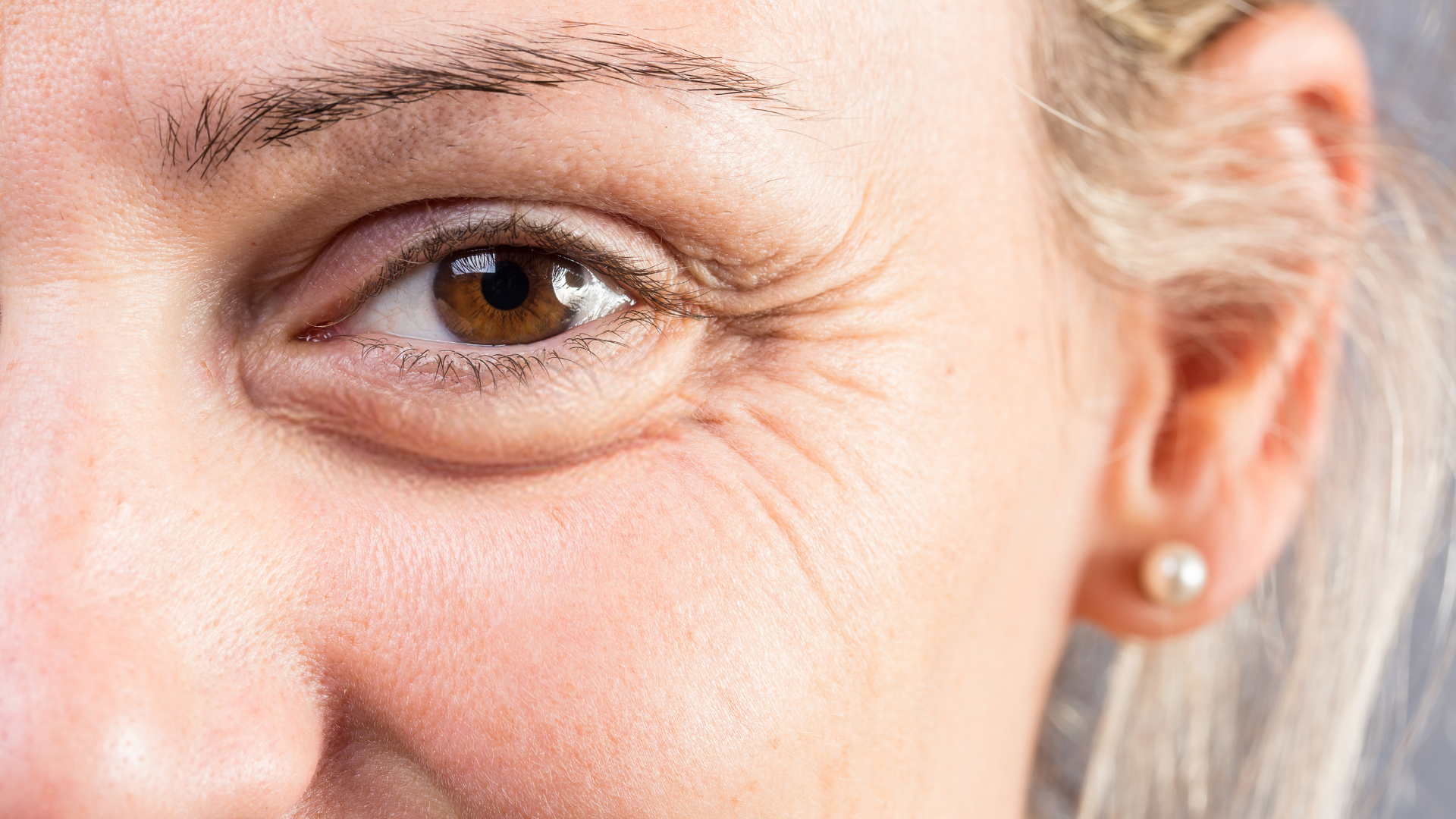
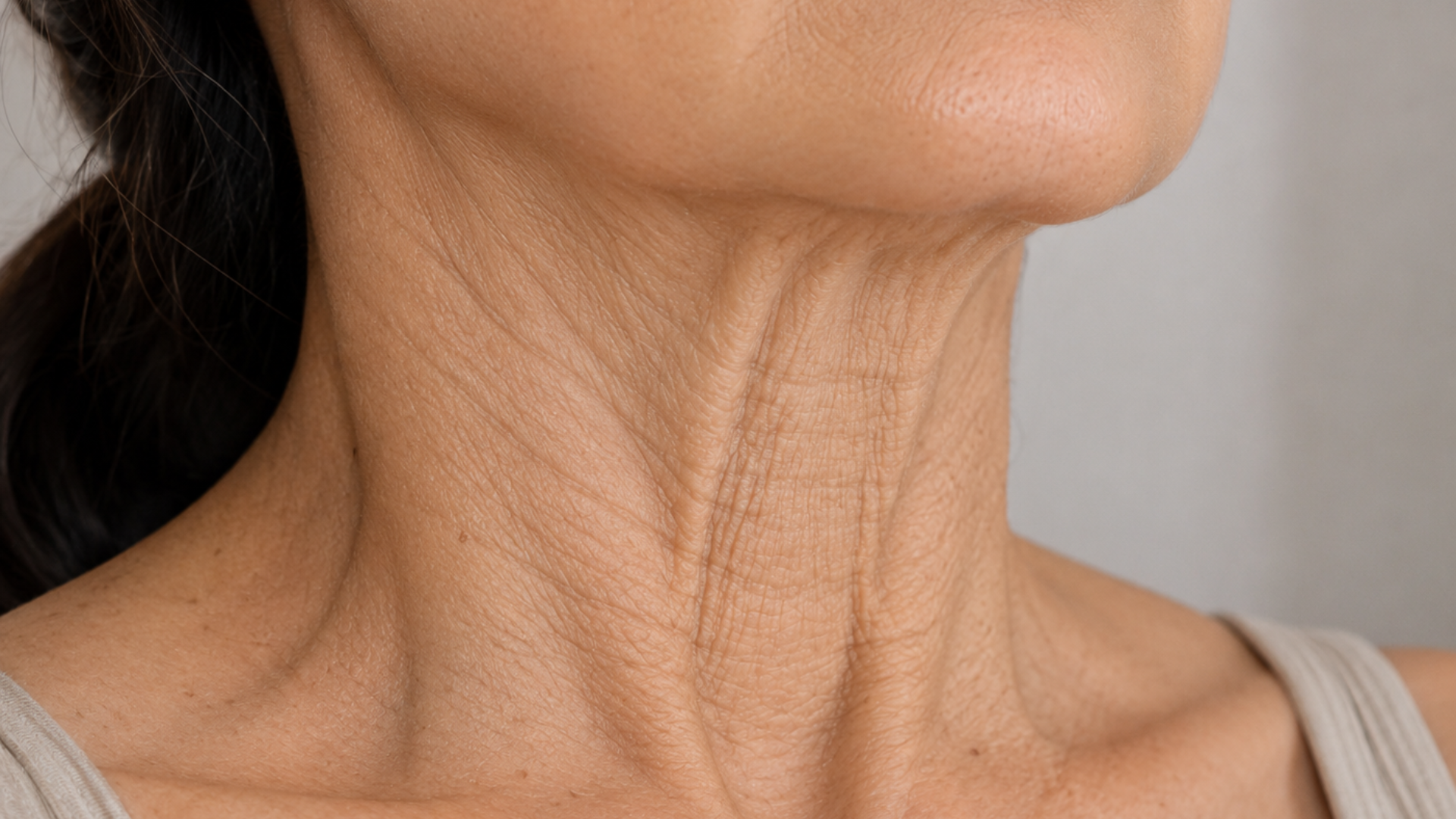
Estrogen withdrawal, glycation, a compromised skin barrier, chronic cortisol elevation, and an overly aggressive skincare routine all feed the same underlying process. Each one adds to inflammation and speeds up the visible signs of aging that most routines are trying to prevent in the first place.
Skin doesn't age in a vacuum — it responds, day after day, to hormones, blood sugar, barrier health, stress, and the products applied to it.
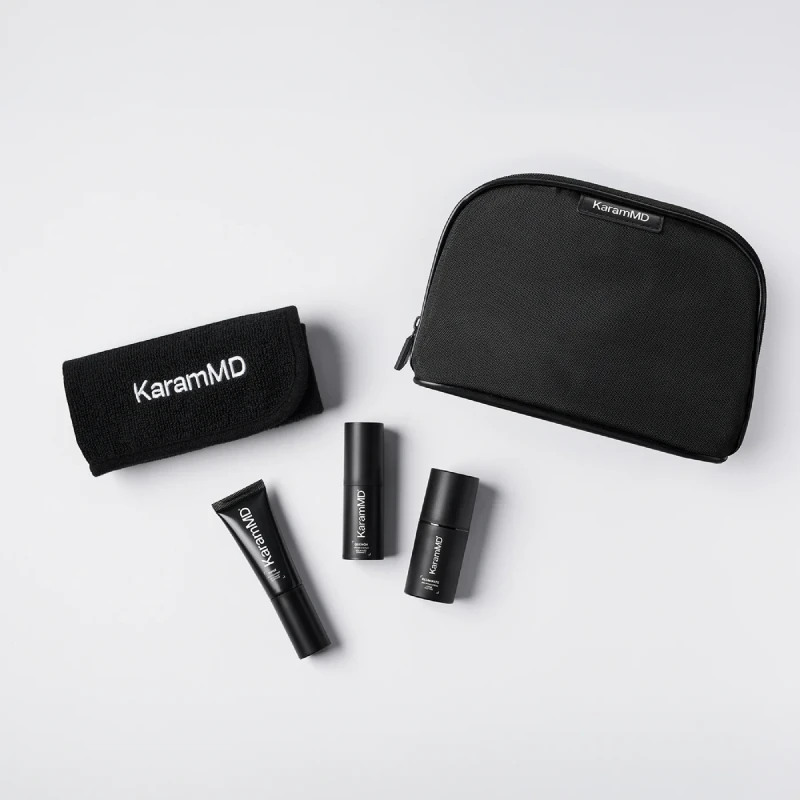
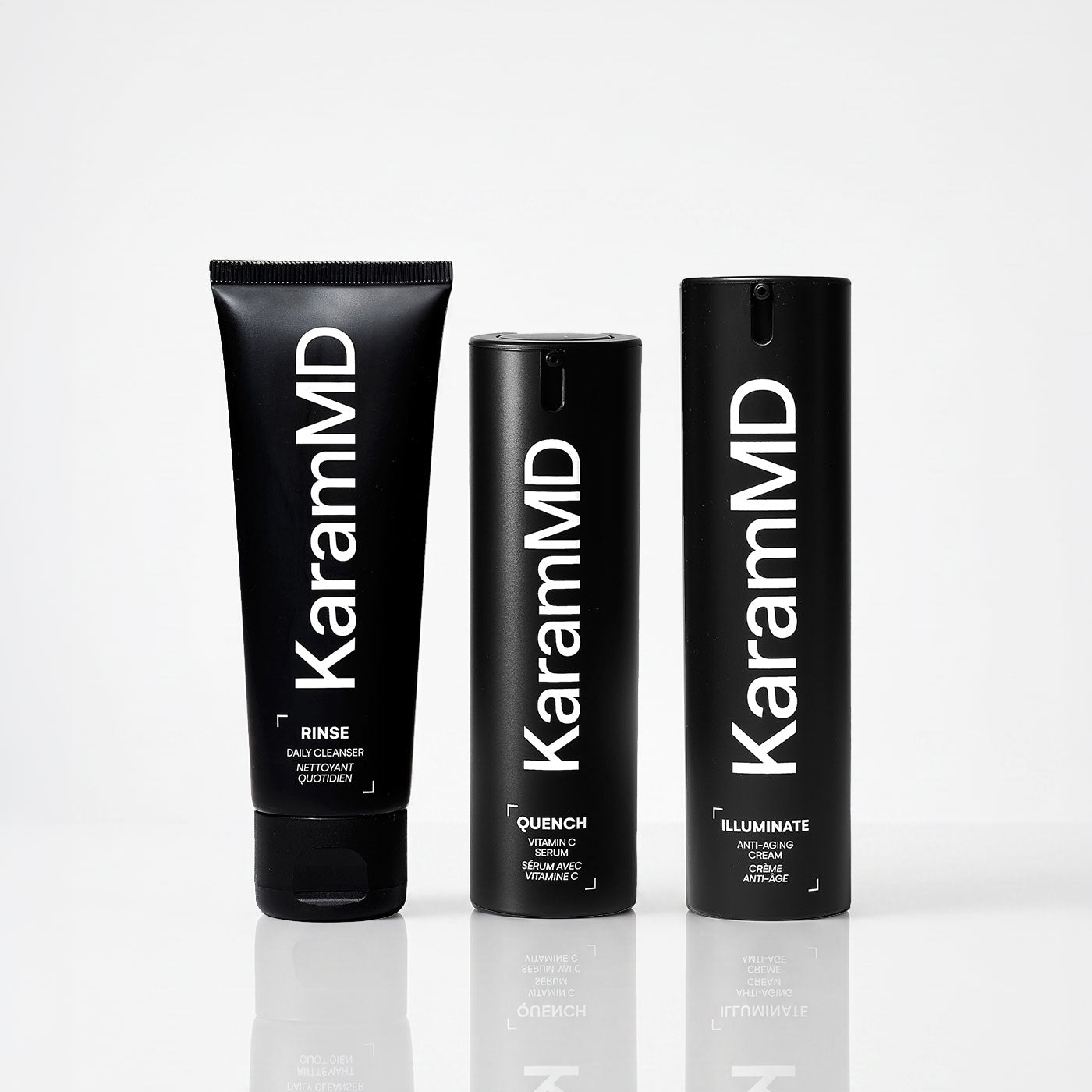
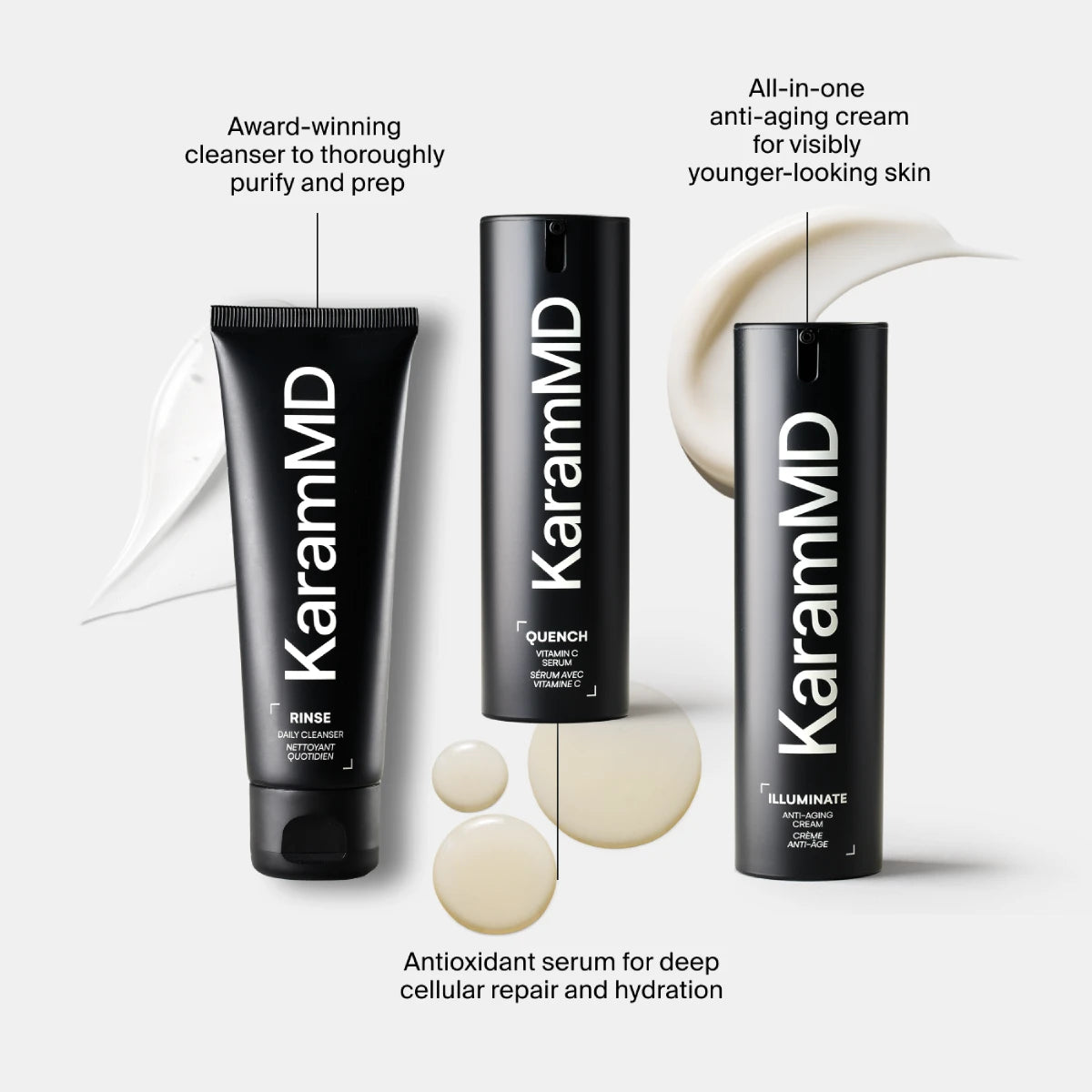
Addressing all five comes down to the same three things: collagen support, barrier protection, and calming ingredients working together instead of competing with each other. That's the framework behind Karam MD Skin's Trifecta System, a three-step routine built specifically to work against inflammaging rather than add to it.
Mapping the System to the Five Causes
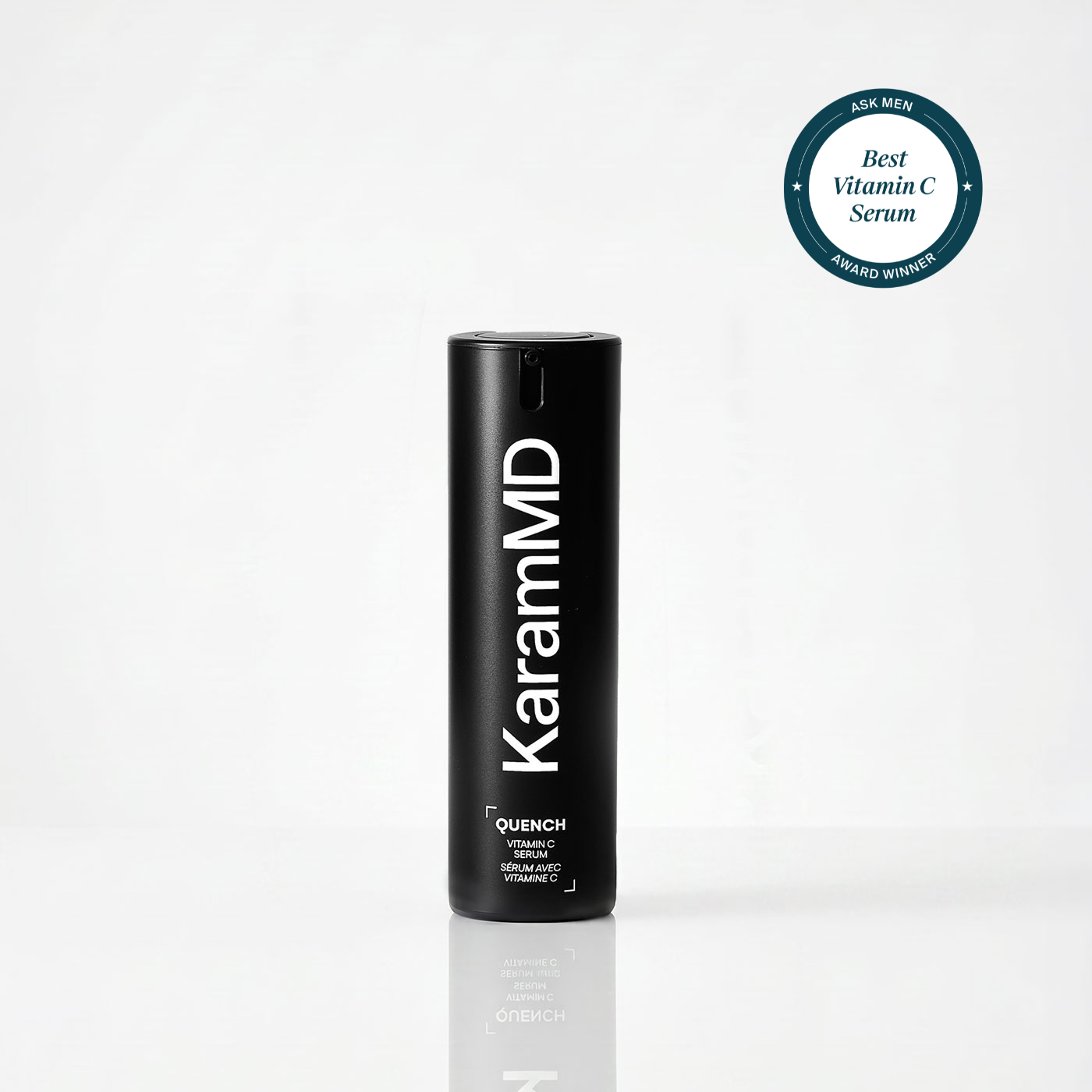
- Estrogen withdrawal: retinol, peptides, and vitamin C — the three ingredients with the strongest evidence for stimulating collagen — are built into Illuminate and Quench.
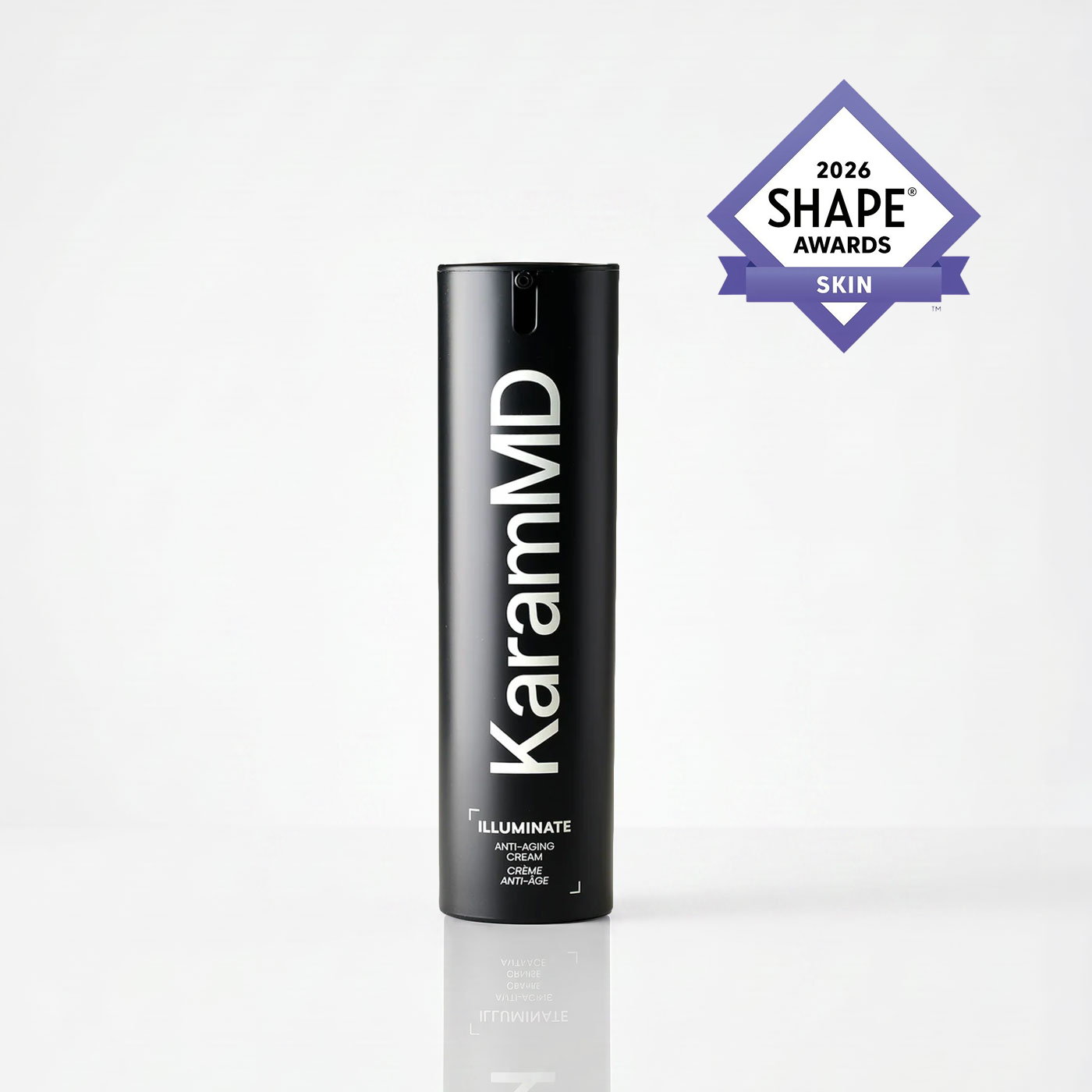
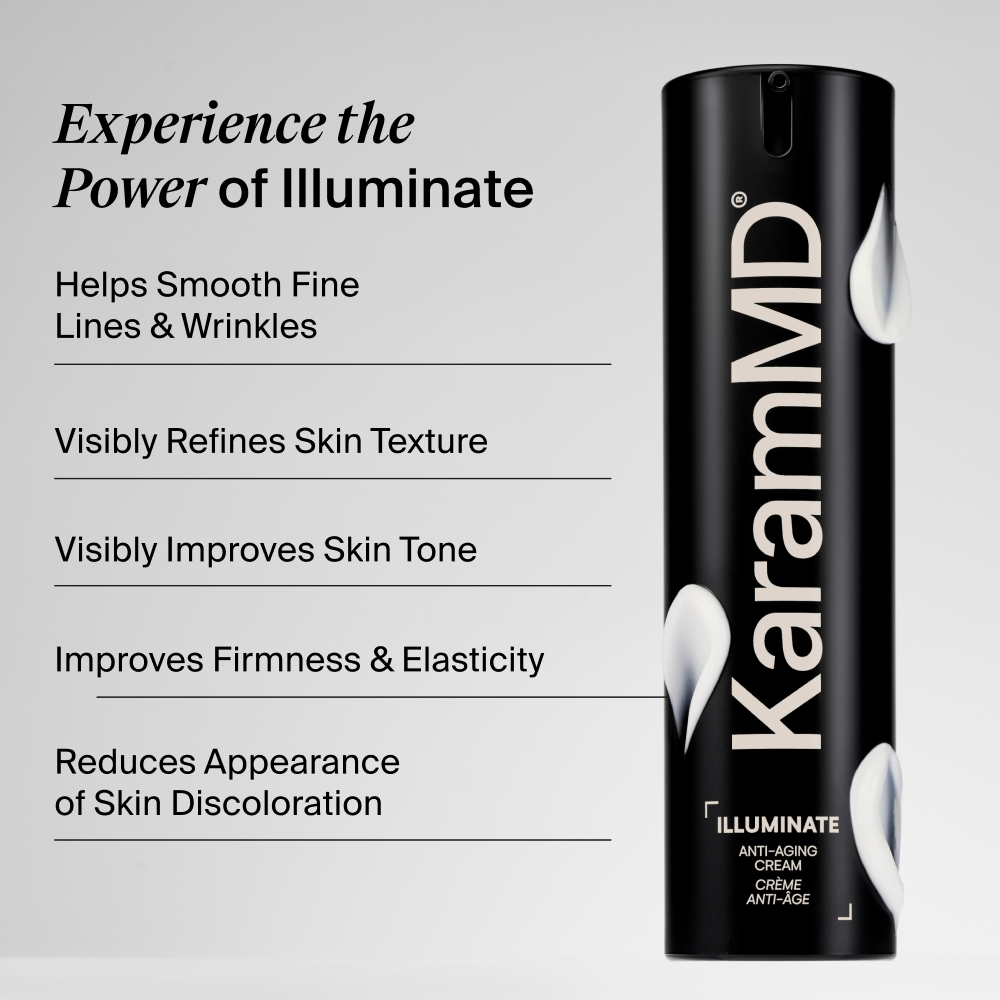
- Glycation: niacinamide in Illuminate has documented anti-glycation properties, directly addressing the AGE-driven dullness and gray cast covered above.
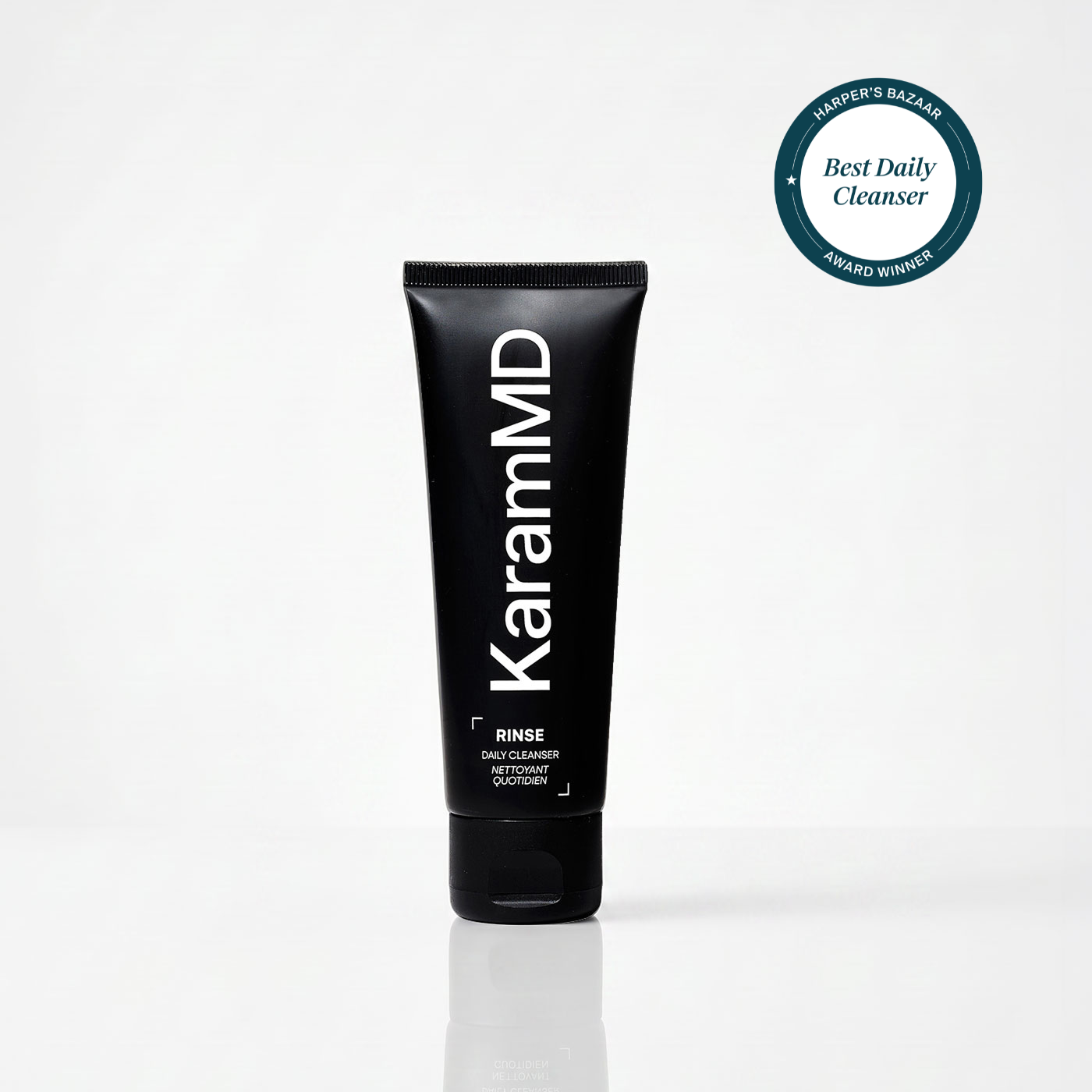
- A compromised skin barrier: Rinse cleanses without disrupting the barrier, and Illuminate is formulated with squalane and shea butter to reinforce it, supporting the same barrier function tied to whole-body inflammation.
- Cortisol and chronic stress: the calming botanicals in Illuminate work to offset the inflammatory cascade that stress-elevated cortisol sets off in skin.
- An overly aggressive routine: the Trifecta's actives are microdosed by design rather than layered at full strength — the difference between a system that delivers results and one that compounds irritation.
Three steps, twice a day: cleanse, treat, moisturize. Delivering meaningful concentrations of retinol, vitamin C, niacinamide, and peptides without overwhelming the barrier is what separates a routine that works against inflammaging from one that quietly adds to it.








7 comments
zohreh schuessler
Dr. Karam,
Although I already have some knowledge about skincare, I have learned so much from the educational content you share. Thank you for taking the time to educate your audience. I look forward to visiting Los Angeles one day, booking an appointment, and meeting you in person.
Sincerely,
Mrs. Schuessler
———
KaramMD Skin replied:
Hi Mrs. Schuessler—Thank you for your comment. It means so much to hear that you’ve found our educational content helpful, especially with your existing knowledge of skincare. We truly appreciate you taking the time to share such kind words. We would love to welcome you to the office someday, and hope you have the opportunity to visit the office and meet Dr. Karam in person!
Sharon Fabres
Why when I apply my vitamin C and then my trivecta,do I get a balling or exfoliating effect on my skin as if my C and trivecta are exfoliating off?it also happens when I put make up on after C and trivecta.My daughter has the same thing happen to her.Are we applying the trivecta too soon after the C?
———
KaramMD Skin replied:
Hi Sharon—Thanks for your comment! There are several reasons pilling can occur. The first and most common is that you are using too much product. Using too much product or layering multiple products excessively can overwhelm the skin and cause pilling. My first recommendation would be to try adjusting the amount of products you’re applying with each use. Apply each step in thin, even layers. There is no need to wait to apply Illuminate after Quench. Incorrect application technique like rubbing or massaging skincare products too vigorously can cause friction, also leading to pilling. Instead, gently pat or press products into the skin using upward motions to encourage absorption without disturbing the layers underneath.
It’s also important to ensure thorough cleansing of the skin with Rinse before applying other products to remove any leftover residue (if you tend to wear heavier make-up or other products you might try a double cleanse). Residual product buildup from previous applications can accumulate on the skin’s surface, leading to pilling when new products are applied on top.
Leave a comment
All comments are moderated before being published.
This site is protected by hCaptcha and the hCaptcha Privacy Policy and Terms of Service apply.