Why Do Your Eyes Look Tired (Even When You're Not)?

Woman with tired-looking eyes

Written by Founder, Amir Karam MD

Quote Icon

Looking tired isn't always a reflection of your lifestyle habit. It's actually your body telling a deeper story, one written beneath the surface of your skin.

Has anyone ever told you you look a little tired despite getting eight hours of sleep and maintaining a super clean diet? Tired-looking eyes are rarely about lack of effort or fatigue, and once you know the real cause, fixing them becomes a lot more straightforward.

In this article, I translate "tired-looking eyes" into clinical terms, explain why eye creams don't always deliver noticeable results, and outline a practical, layered approach to addressing them. Whether you're noticing early changes around your eyes or just wondering why you always appear exhausted, this is the full picture

What Causes Tired-Looking Eyes?

When someone tells you that you look tired, they're usually not making a judgment about your lifestyle or sleep schedule. They're unconsciously reacting to a set of very specific visual cues your face is giving off. These are the most common ones to take note of:

  • Darkness or discoloration under the eyes
  • Hollowing in the under-eye area
  • Flat or deflated-looking cheeks
  • Dull, uneven skin tone
  • Downturned corners of the eyes or mouth

Each of these signals can read as "fatigue" to the human eye, even when the person wearing that face feels 100% awake and healthy.

What Are the Reasons Your Eyes Look Tired All the Time?

When it comes to tired-looking eyes, most people are looking for answers in the wrong place. They focus on more sleep or limiting screen time – and while those things do matter in the grand scheme, they're not the root cause of a persistently devitalized appearance. 

Here are the 5 real culprits:

01.

Under-Eye Hollowing

The skin around your eyes is the thinnest on your entire face, and as we get older, we naturally lose volume in the fat pads beneath that delicate skin. 

When those fat pads diminish or shift, it creates a hollowed-out appearance called tear trough hollowing, and that hollow casts a shadow. Shadows, more than pigment alone, are what make you look tired, sunken, and older. Several factors can accelerate this, such as fat loss around the eyes and collagen loss, which can make hollows appear more prominent.

02.

Midface Volume Loss

Your midface – cheekbones and the tissue around them – acts as the eye’s support frame. As we age, cheek volume declines and the tissue shifts, causing the lower eyelids to droop and the eyes to look tired.

The midface contains fat pockets that shrink at different rates, and the ligaments that anchor tissue to bone loosen over time, accelerating the descent. That cheek-lower lid junction, often called the double convexity, can read as fatigue. 

03.

Skin Quality Decline

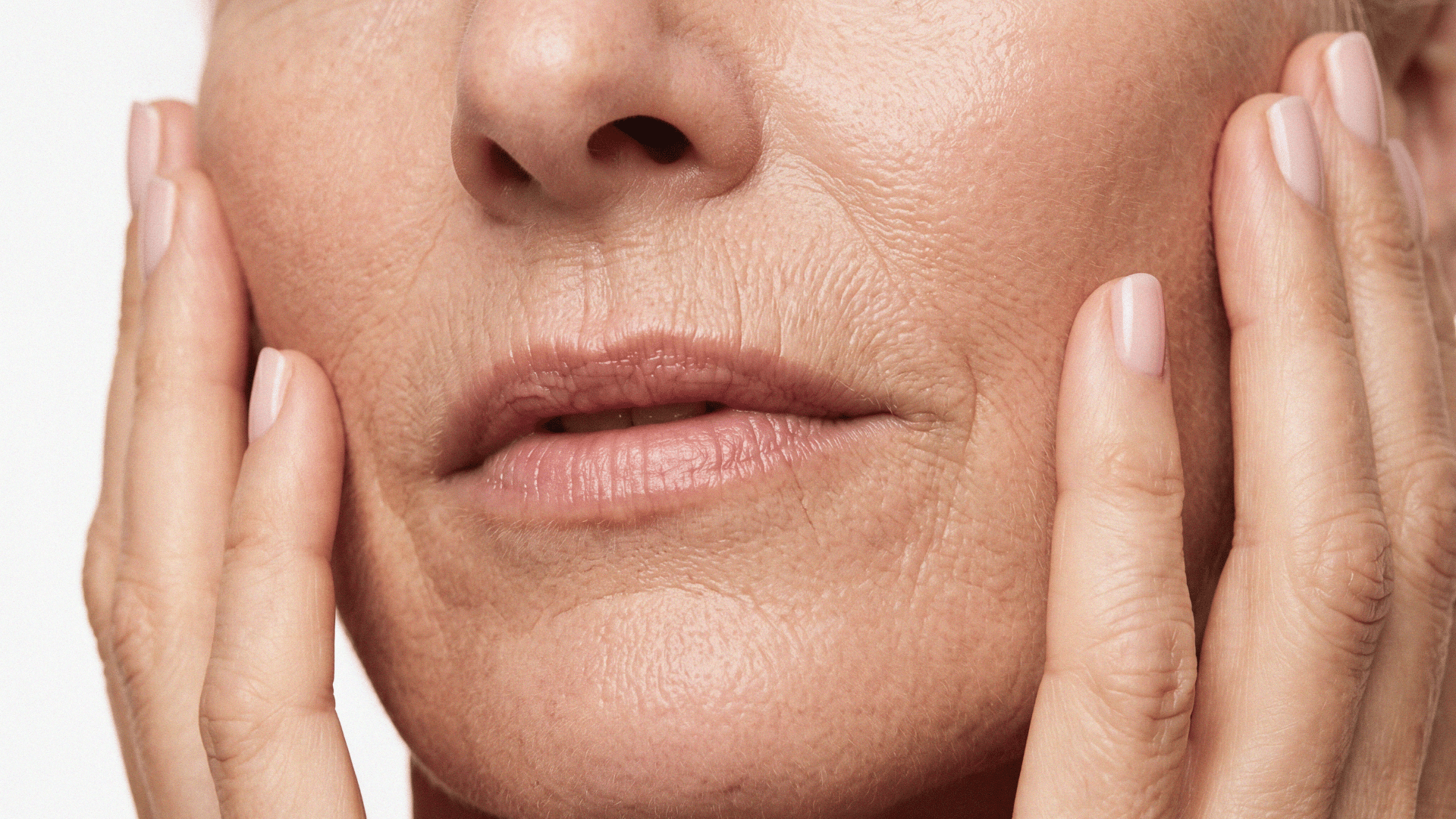
From your mid-twenties onward, collagen starts declining about 1% every year, and elastin follows, which impacts your skin's natural ability to bounce-back. Once that happens, you'll start seeing texture.

Sun exposure makes it worse by activating enzymes that break down those same structural proteins, so even someone with great habits can fall behind without sun protection.

Cell turnover slows too, and with it, the skin's ability to shed dull surface cells and reveal fresher ones underneath – leaving the complexion looking flat and uneven rather than bright.

Hydration is another big piece of the tired-eye puzzle, and I’ll say that this area is particularly unforgiving. There are very few oil glands around your eyes, so it doesn’t have the same natural barrier as the rest of the face. Add in the fact that hyaluronic acid levels drop as we age, and you end up with skin that simply cannot hold on to moisture the way it used to.

04.

Chronic Inflammation

Chronic inflammation is one of the most underrated contributors to how tired your eyes look, yet it rarely gets any attention. It doesn’t have to be visible redness or irritation; it can be a low-grade process driven by UV exposure, poor diet, disrupted sleep, pollution, and stress

This is a gradual buildup that accelerates visible deterioration over time. It tends to surface as persistent puffiness, uneven tone, and a worn-out appearance that doesn’t seem to shift, no matter how much rest someone gets.

Cortisol sits at the center of this. When levels remain elevated, as they do with stress or poor sleep, the body begins to break down collagen, weakening the barrier and reducing its capacity to retain moisture. The result is skin that looks swollen, lackluster, and overly fragile. 

05.

Oxidative Stress

Oxidative stress is part of the same picture, working at a cellular level to compound what inflammation has already set in motion. Free radicals, which are unstable molecules triggered by things like the sun, pollution, blue light, alcohol, and sugar, essentially go rogue inside your skin. This breaks down the structural proteins that keep it smooth and firm. 

The more exposure, the faster that breakdown happens.

Glycation adds another layer of damage; excess sugar molecules bind to collagen and elastin, making them rigid and contributing to dull, stiff skin. Because your eye area is so thin and delicate, it tends to be the first place where all of these shifts become visible.

Can Eye Creams Fix Tired-Looking Eyes?

The right active ingredients used steadily can improve hydration, texture, brightness, and fine lines around the eyes. However, the root cause matters more than anything when answering this question, because the right solution depends entirely on which of these underlying factors is actually driving the tired look you see in the mirror.

For someone whose tired appearance is driven by skin quality decline, clinically active ingredients will make a real difference over time. The issue is the assumption that they work for every version of this problem.

If the underlying cause is tear trough hollowing, midface descent, or fat pad loss, no topical product can restore lost volume or reposition shifted tissue. That’s not a failure of the product you used; that’s simply the boundary of what skincare can and cannot reach.

This is where the frustration sets in. 

People notice they look tired, they invest in eye cream after eye cream at every store, and nothing changes. That’s almost always a sign that the problem is structural rather than superficial, and that the solution needs to match the actual cause rather than the most convenient one. Knowing which category you fall into changes everything about how you approach tired-looking eyes and how wisely you spend.

For a deeper look at eye creams – and how to know whether you need one – read this article.

What Can Fix Tired-Looking Eyes? A Layered Approach

Fixing persistently tired eyes isn't about finding a miracle product or getting a treatment. It requires understanding the layers of the problem and addressing each one appropriately.

Layer 1

Daily Skin Health – The Non-Negotiable Foundation

This is where everyone should start, and where most people have the biggest opportunity for improvement. Used on a regular basis, clinically active skincare doesn't just improve how your skin looks – it changes what's happening at the cellular level over time.

The ingredients that matter most for tired-looking eyes and overall skin vitality are:

  • Retinol: Stimulates cell turnover, rebuilds collagen, and improves skin texture and tone
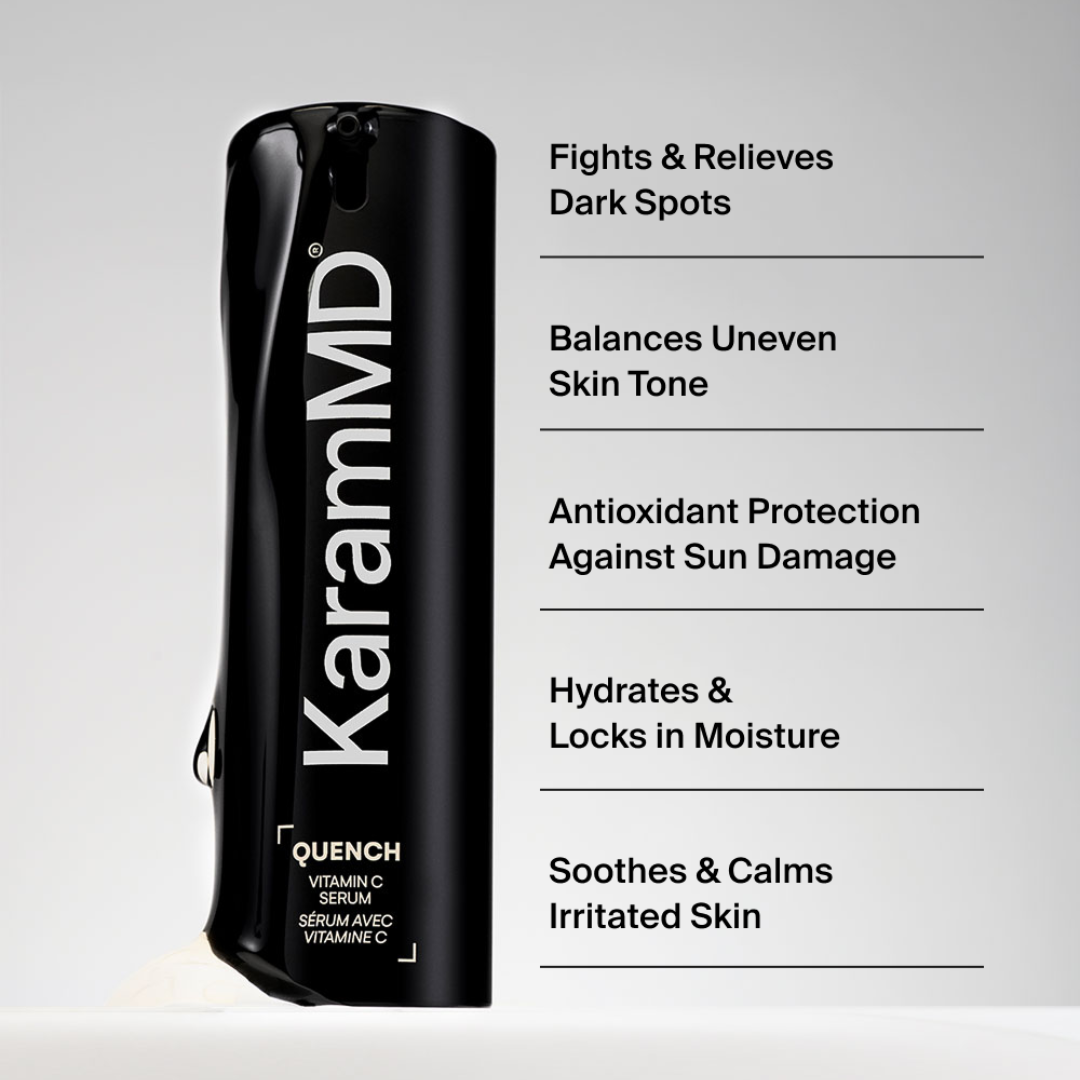
  • Vitamin C: Neutralizes free radicals, brightens, and supports collagen synthesis
  • Peptides: Signals the skin to produce more collagen and elastin, helping firmness
  • Niacinamide: Reduces inflammation, evens out skin tone, and reduces puffiness
  • Hyaluronic Acid: Attracts and retains moisture, plumping the skin from within
  • Caffeine: Constricts blood vessels temporarily, reducing puffiness and dark circles

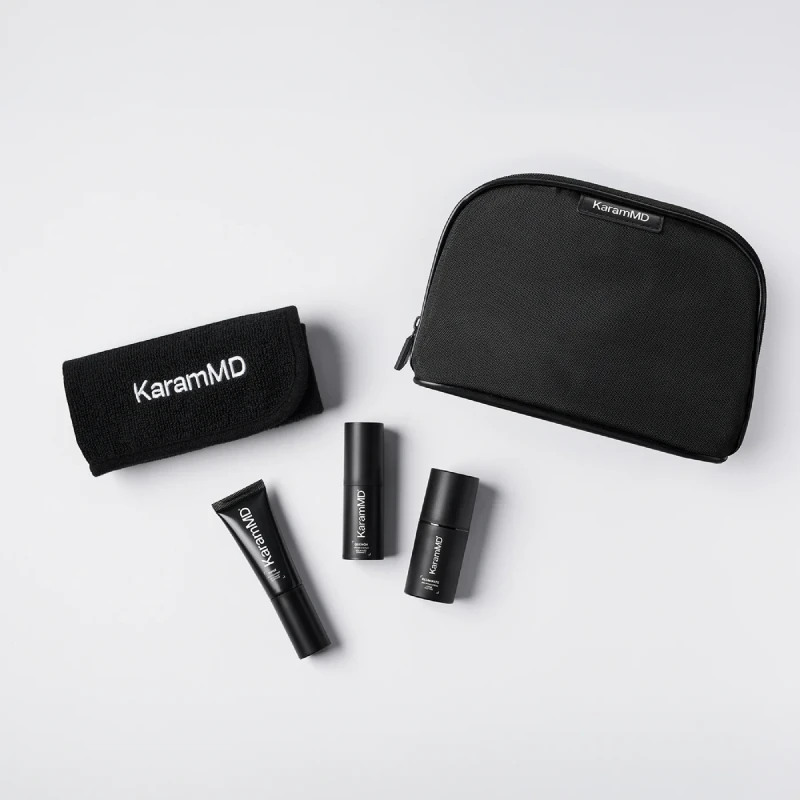
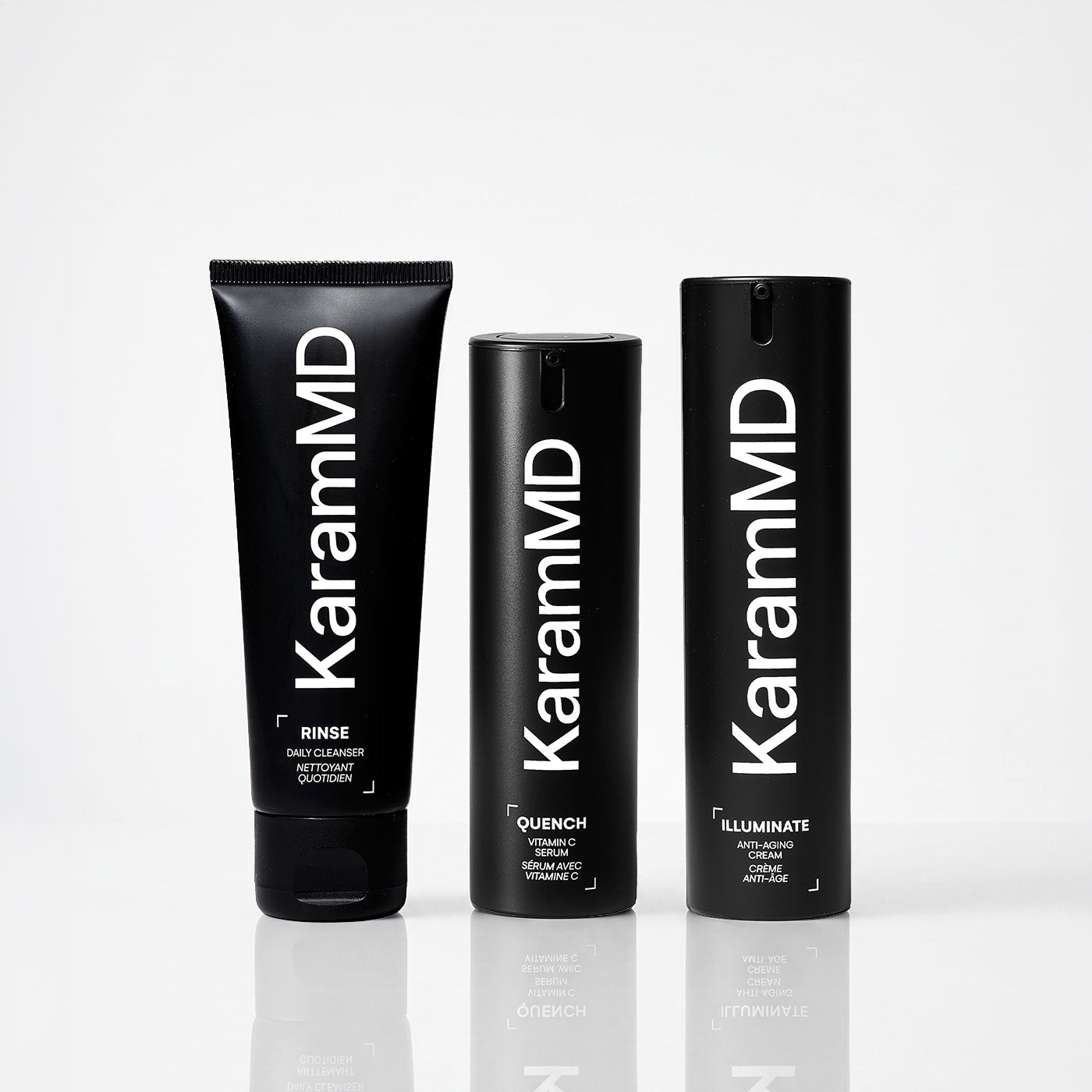
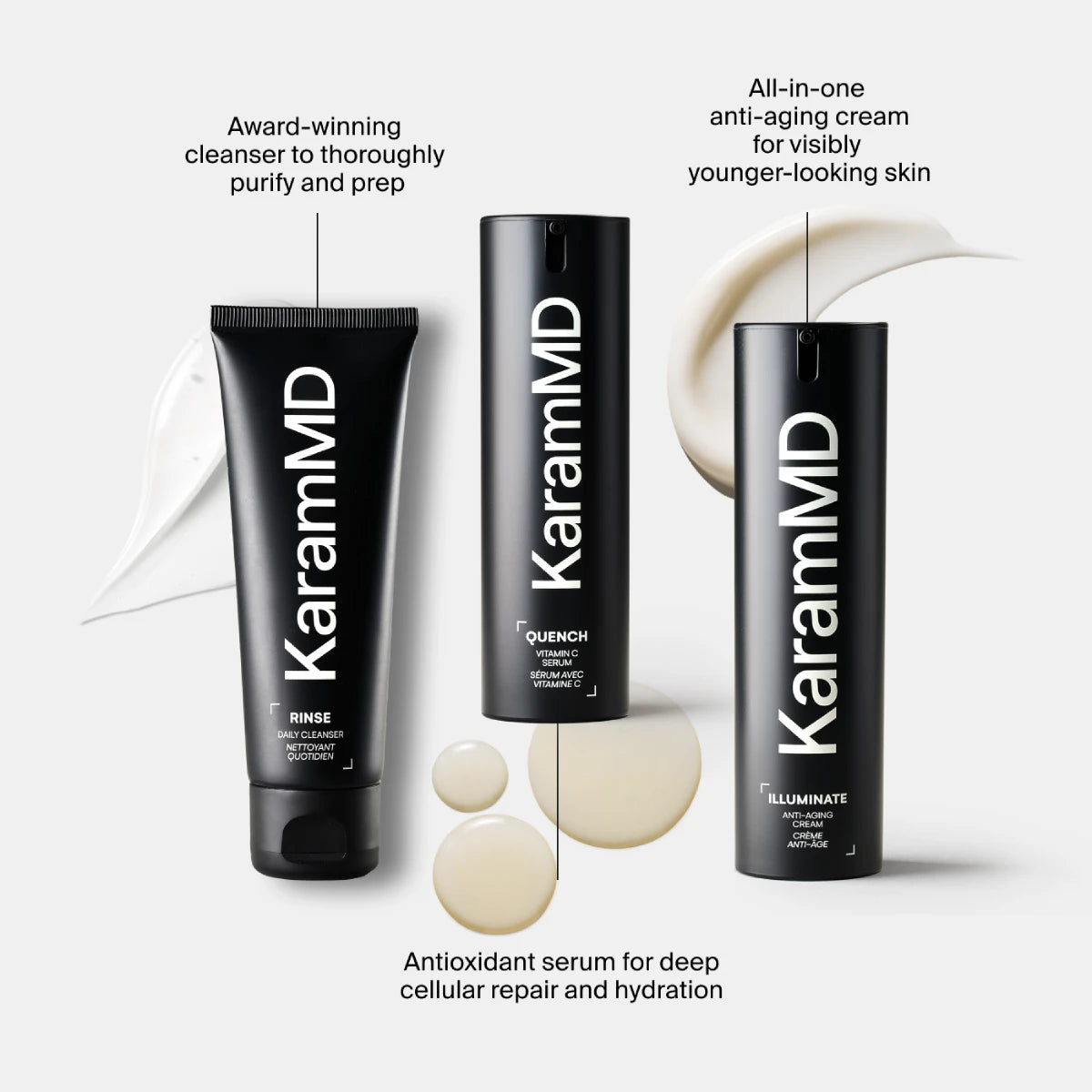
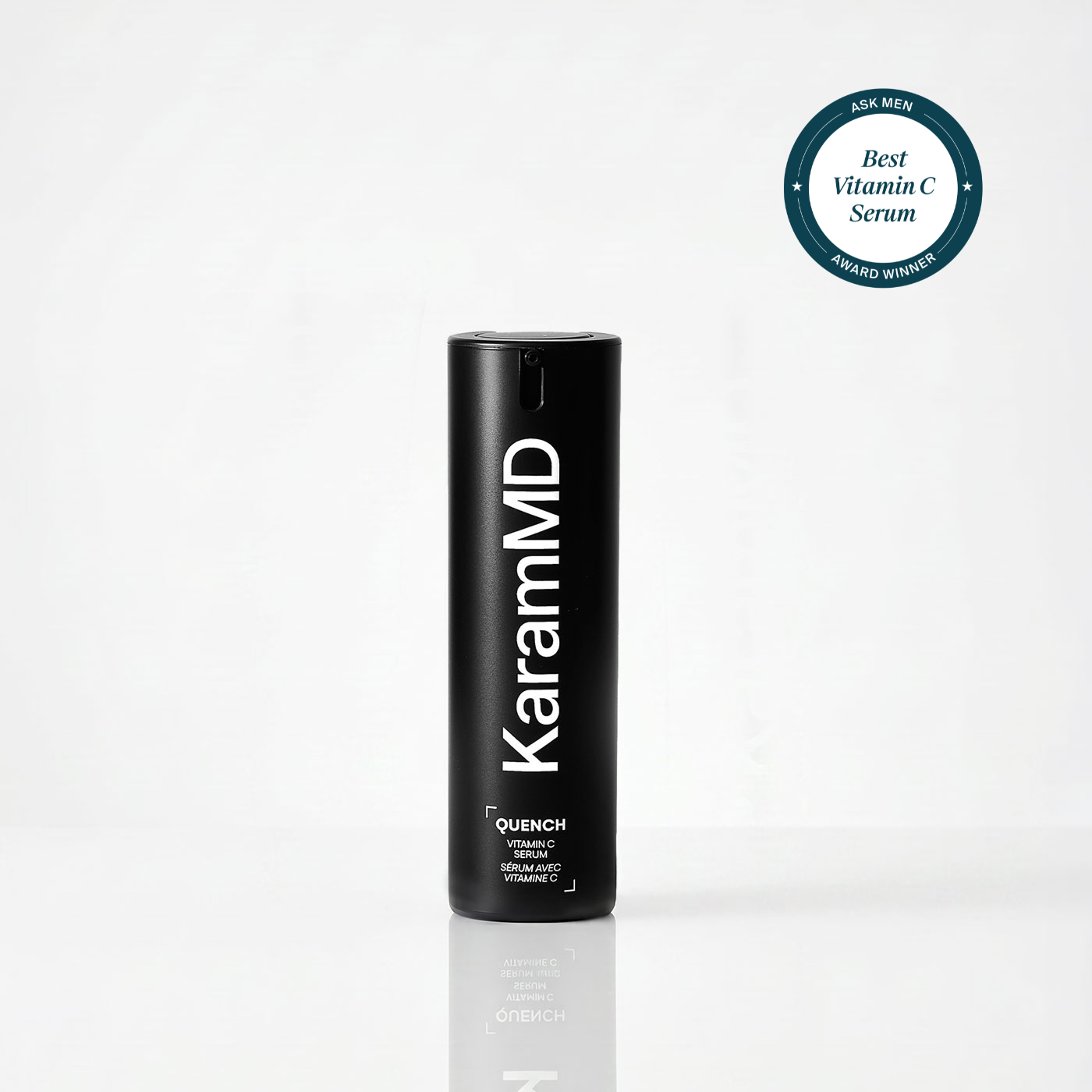
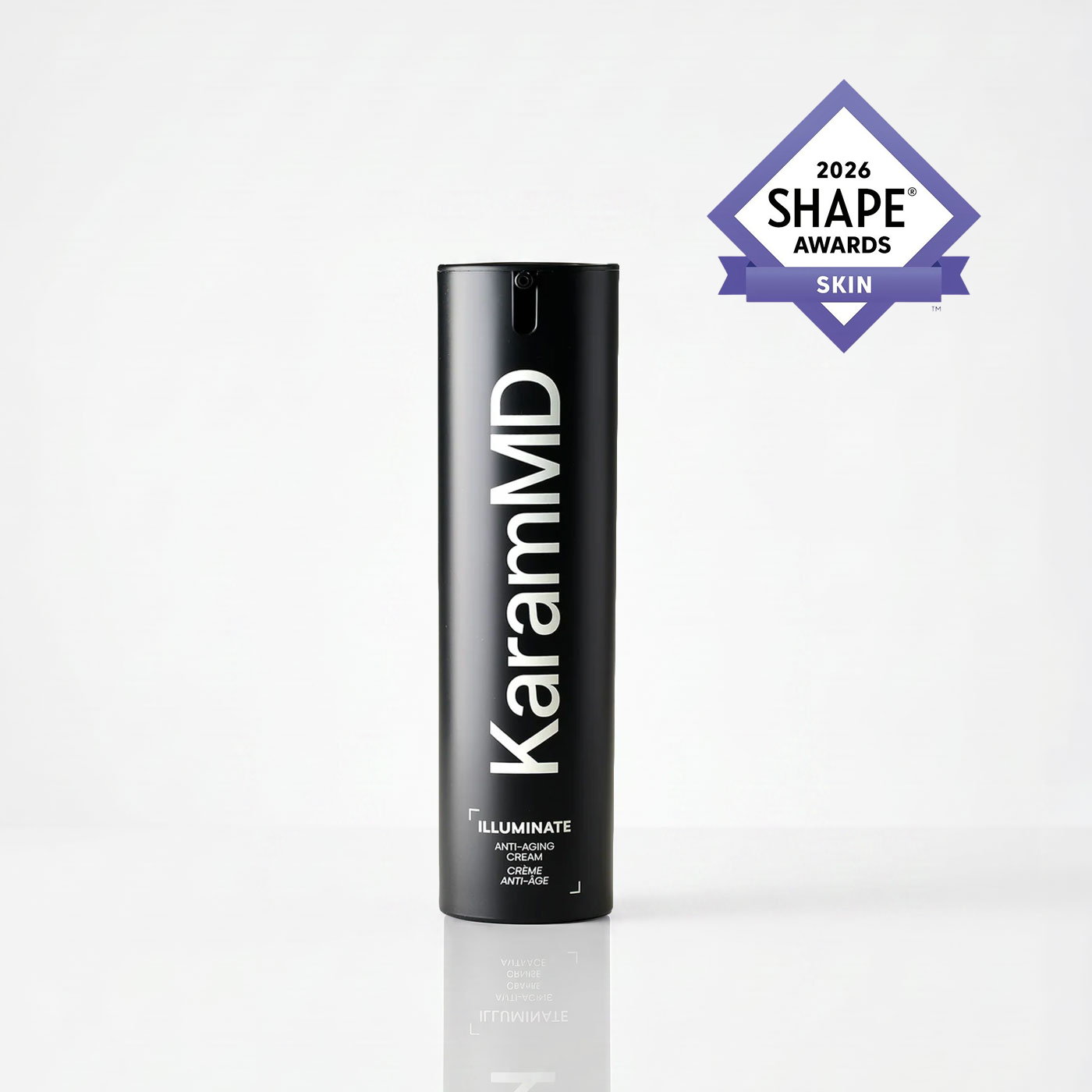
The challenge most face isn't knowing that these ingredients exist; it's actually using them consistently. It’s why I created the KaramMD Trifecta. Three steps with every active ingredient you need, and gentle enough to use around the eyes, replacing the need for an eye cream.

Layer 2

Support Collagen and Circulation Through Lifestyle

Skincare lays the foundation, but what you do off the clock matters just as much.

The lifestyle habits that most directly affect how tired your eyes look are:

  • Sun protection: UV exposure is the single greatest accelerant of collagen loss and skin aging, meaning daily SPF is a non-negotiable aspect of a good skincare routine.
  • Hydration: Chronically dehydrated skin is dull, thin, and prone to the shadowing that makes you look tired. Using a good moisturizer and staying hydrated are both vital.
  • Sleep quality: Not just quantity, but quality. During deep sleep, your body repairs cellular damage and regulates cortisol – all of which directly affect skin health. Most adults need 7 or more hours of quality sleep per night to feel well-rested.
  • Diet and inflammation: Foods high in sugar, refined carbohydrates, and alcohol promote systemic inflammation that shows up on your skin. An anti-inflammatory diet that’s rich in antioxidants (berries, dark chocolate) supports your skin from the inside out.
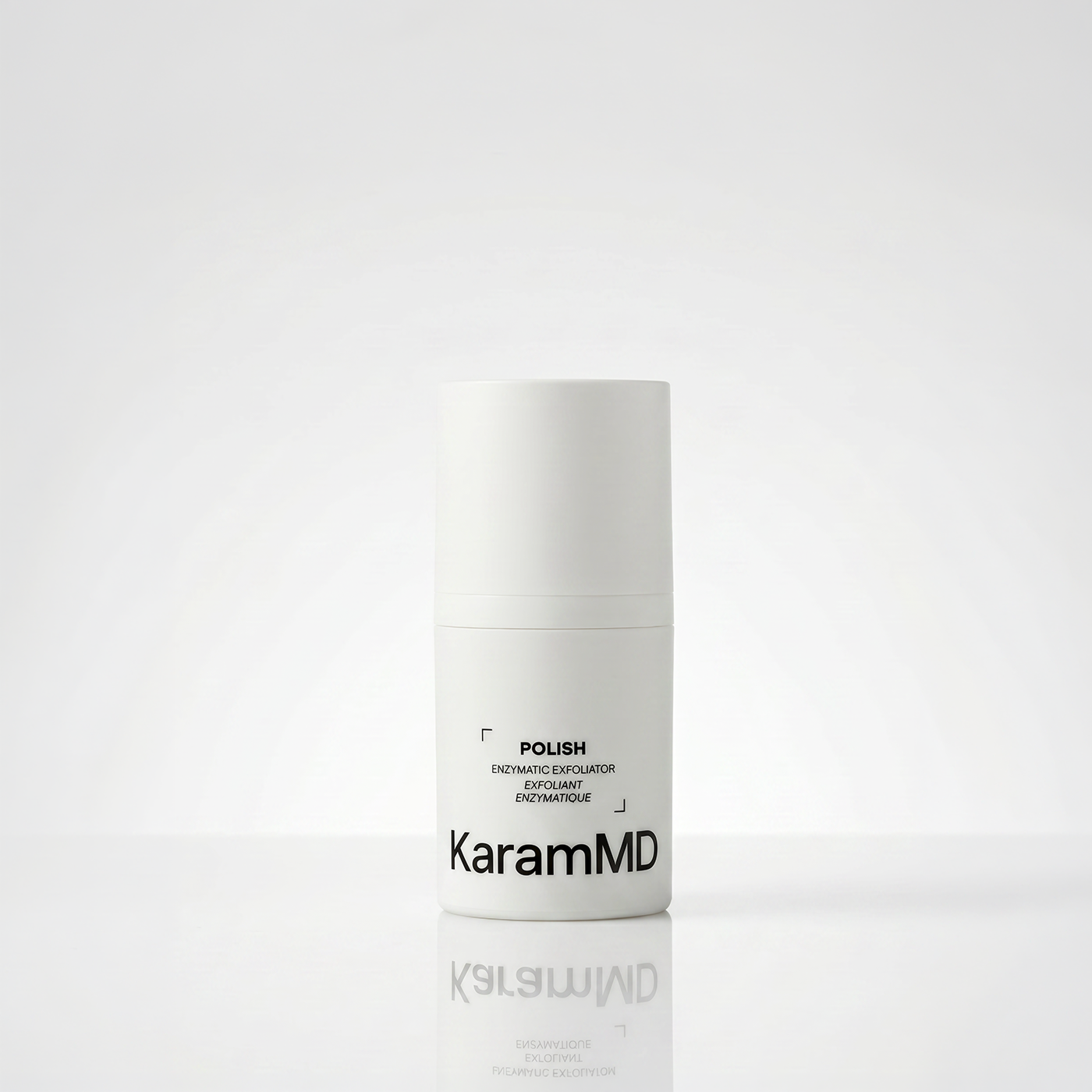
  • Exfoliation: Regular exfoliation – like with Polish or a chemical peel – accelerates surface cell turnover, improves tone and texture, and allows your active skincare ingredients to absorb and perform more effectively.

Layer 3

Structural Correction – When Skincare and Lifestyle Aren't Enough

When the problem is tear trough hollowing, midface descent, or fat pad loss, structural rejuvenation – cosmetic procedures that include both surgical and non-surgical options – creates lasting change. 

Treatments like fat transfer, eye rejuvenation, or a holistic facial lift address the underlying facial architecture, restoring volume and support that skincare alone cannot provide. 

This doesn’t mean everyone needs an in-office procedure; many people see remarkable improvement from Layers 1 and 2 alone, especially when they start early and stay consistent.

But for those wondering why nothing topical seems to be making a dent, the structural layer is where the answer usually lives.

Seeing The Full Picture On Tired-Looking Eyes

If your eyes look tired even when you feel completely fine, that’s not a personal failure — and it’s certainly not something an early night will fix on its own. It’s your face communicating something deeper about volume, cellular health, skin quality, and structure. The good news is that once you understand the tired-eye conversation, you can respond to it.

Start with the foundation – active skincare, sun protection, and lifestyle habits that support your skin from within.

Amir Karam MD

Board Certified Facial Plastic Surgeon
Founder / Creator of KaramMD Skin

Dr. Amir Karam is a world-renowned facial plastic surgeon specializing in facial and skin rejuvenation. With over two decades of experience, he has helped countless patients achieve a naturally youthful, refreshed appearance. As an innovative surgeon, researcher, textbook author, and speaker, he is a leading authority in his field. Beyond performing surgical procedures that restore a youthful facial shape, he emphasizes the importance of skin quality, ensuring a comprehensive approach to facial rejuvenation. As the founder of KaramMD Skin, he is dedicated to making advanced skincare simple, effective, and accessible—helping you look as young as you feel.

Leave a comment

All comments are moderated before being published.

This site is protected by hCaptcha and the hCaptcha Privacy Policy and Terms of Service apply.