She Already Looked Great at 60. So Why Did She Choose a Facelift?

She Already Looked Great at 60. So Why Did She Choose a Facelift?

Written by Founder, Amir Karam MD

Quote Icon

One of the most common reactions I hear when I share a before-and-after photo of a facial rejuvenation patient is, “But she already looked great before surgery. Why did she need a facelift?”

That’s exactly what happened when I shared the results of my patient Jamie, a beautiful 60-year-old woman whose  transformation attracted so much attention that it was featured in People magazine. 

Some people thought she looked decades younger, while others wondered why someone who already looked so good would choose to have surgery in the first place.

And I completely understand the question.

Jamie really did look wonderful before surgery. She had beautiful skin, relatively few signs of aging around her eyes, and had clearly taken exceptional care of herself over the years. But she was beginning to notice changes that were increasingly bothering her, even if they weren’t particularly obvious to everyone else.

What makes her story interesting is that she never imagined she would have a facelift. In fact, she told People that she had always planned to age gracefully and avoided facial plastic surgery because of its reputation for producing unnatural results. But as she approached 60, she began reconsidering that position.

She had followed my work for several years and realized that facial rejuvenation didn’t necessarily mean looking like a different person. It could mean looking like herself again.

And that’s really what this story is about.

Why We Want to Look Like Our Younger Selves

Something I’ve noticed throughout my career is that most of us carry around a mental image of ourselves that doesn’t necessarily change as we get older.

For many people, that image is somewhere in their 30s. It’s when our features have matured, but the more significant changes associated with facial aging haven’t yet become apparent.

Then, as we move through our 40s, 50s, and 60s, the face gradually changes. One day we look in the mirror or see a photograph and realize we don’t quite look the way we remember.

This is what brings many patients into my practice. 

It’s not necessarily that they look old to other people. It’s that they no longer recognize the younger version of themselves that they’ve carried around in their minds for so many years.

Jamie was experiencing exactly that. And my goal was to understand what had changed anatomically and determine how we could restore those features without changing what made her look like Jamie.

The Two Essentials of a Youthful Face: Skin and Shape

I always say that youthful facial appearance depends on two essential things: healthy skin + youthful facial shape.

It’s important to understand the difference between what skincare can accomplish and what requires surgery.

  • You can have beautiful, well-cared for skin but still develop sagging cheeks, jowls, and changes in the jawline as the deeper facial tissues descend. 
  • Conversely, you can have a beautifully lifted face following surgery, but if the skin itself has significant sun damage, wrinkles, and discoloration, the overall appearance will still reflect those changes.

In Jamie’s case, her skin was already exceptionally well preserved. What needed attention was the shape of her face and some of the volume changes that had occurred over time.

Restoring Jamie's Facial Shape

When I evaluate a face for rejuvenation, one of the first things I look at is its overall shape, particularly from the front.

A youthful face typically has a more heart-shaped appearance, with fullness in the upper and middle face and a narrower, more defined jawline. As we age, the tissues of the cheeks, jawline, and neck gradually descend, creating heaviness in the lower face and a more square or rectangular appearance.

When I compared Jamie’s photographs with what she looked like in her 30s, these changes became apparent. Her cheeks had descended slightly, her jawline had become heavier, and she had lost some of the youthful contours that once defined her face.

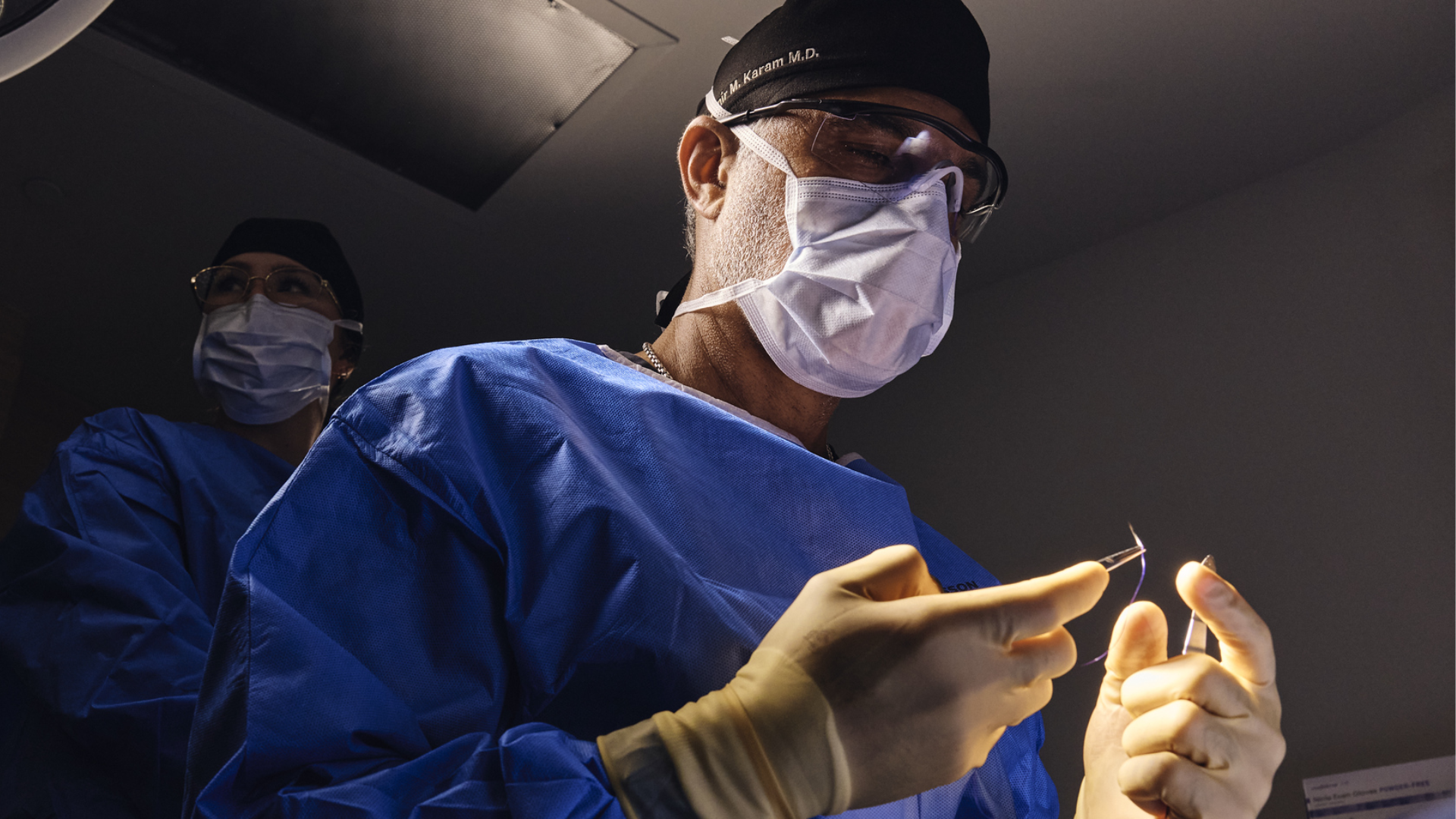
To address this, I performed my Vertical Restore® facelift, which repositions the deeper facial tissues in a predominantly vertical direction, restoring the cheeks, jawline, and neck toward their more youthful positions.

The objective isn’t simply to tighten the skin. It’s to restore the natural anatomy without creating the pulled or stretched appearance that people understandably associate with traditional facelift surgery.

Restoring Volume Without Overfilling

The second component was facial volume.

As we age, we experience changes in facial fat and bone that contribute to hollowing, particularly around the eyes and temples. These changes can make the face look tired even when the skin itself is healthy.

Jamie had some volume loss around her upper and lower eyelids, temples, and portions of the lower face.

I addressed these areas with carefully placed fat transfer, restoring the fullness that had diminished over time.

But one important thing I didn’t do was add excessive volume to her cheeks.

Why? Because much of the apparent volume loss in her midface was actually related to tissue descent. Once we lifted her cheeks back into position, much of that fullness returned naturally.

Adding unnecessary volume could have made her look overly full or different from how she looked when she was younger.

And that’s exactly what I want to avoid.

Interestingly, Jamie also didn’t need upper or lower eyelid surgery. Her eyelid skin was remarkably well preserved, and there wasn’t significant excess skin that required removal.

This is an important principle in facial rejuvenation. Just because someone is having a facelift doesn’t mean they need every possible procedure. The goal is to identify what has actually changed and correct only what needs correcting.

Jamie’s End Result Started Decades Before Surgery

Of everything that stands out about Jamie’s case, this may be the most important lesson for anyone reading this article:

She had remarkably youthful skin.

Her skin was smooth, luminous, and showed relatively little of the cumulative damage we typically associate with decades of aging.

And that didn’t happen by accident.

Jamie had been diligent about sun protection and consistently using effective skincare for many years. She understood that maintaining healthy skin isn’t something you start thinking about once wrinkles and discoloration become obvious. It’s something you work on throughout your life.

I often talk about how the skin you have in your 60s is influenced by the decisions you make in your 30s, 40s, and 50s.

Daily sun protection, consistent skincare, and a healthy lifestyle can make a meaningful difference in how your skin ages.

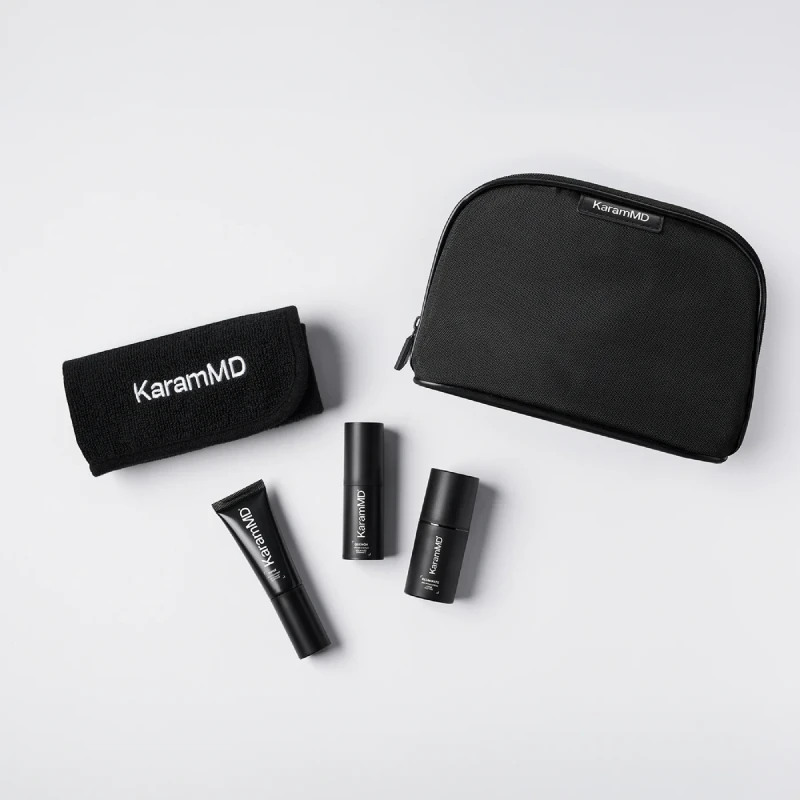
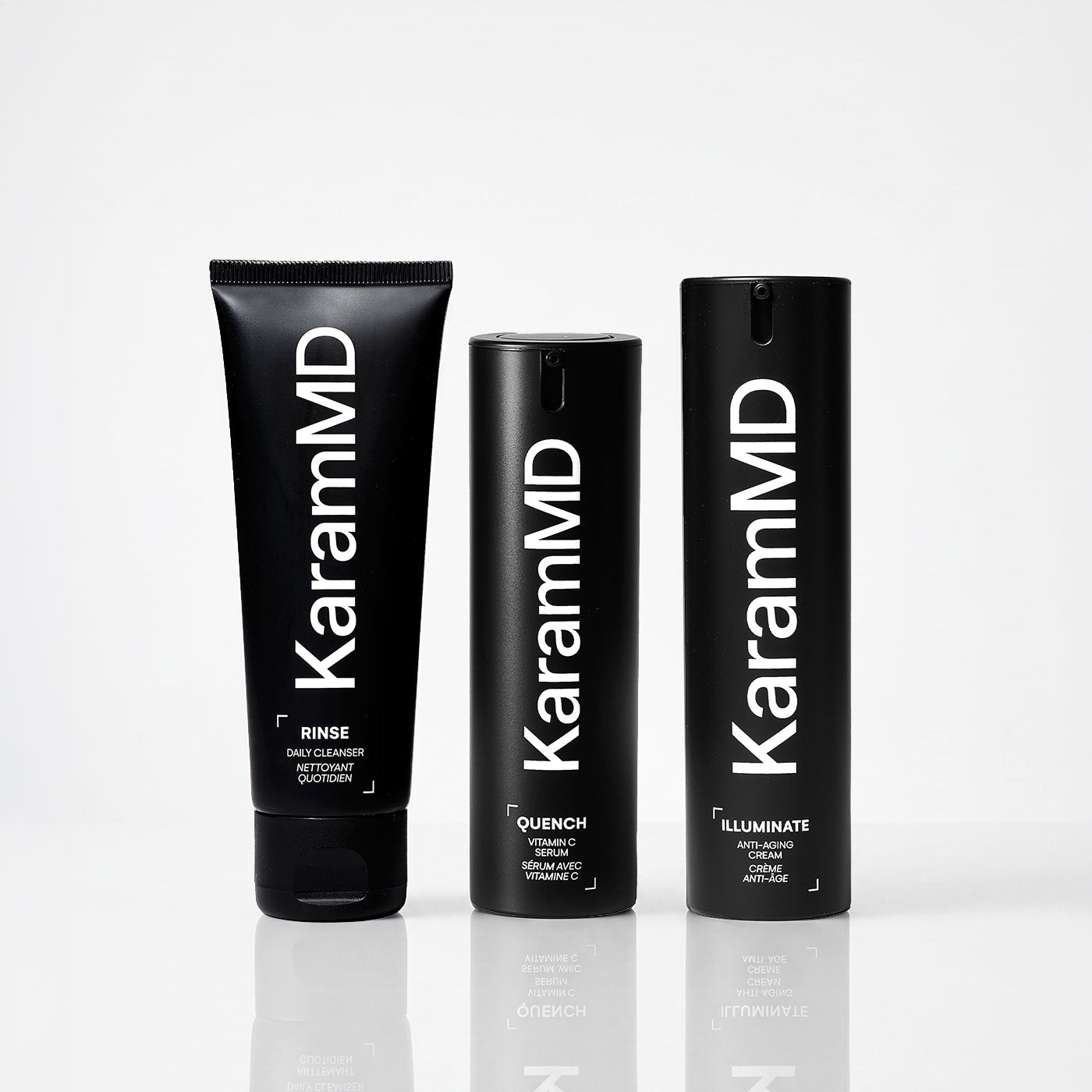
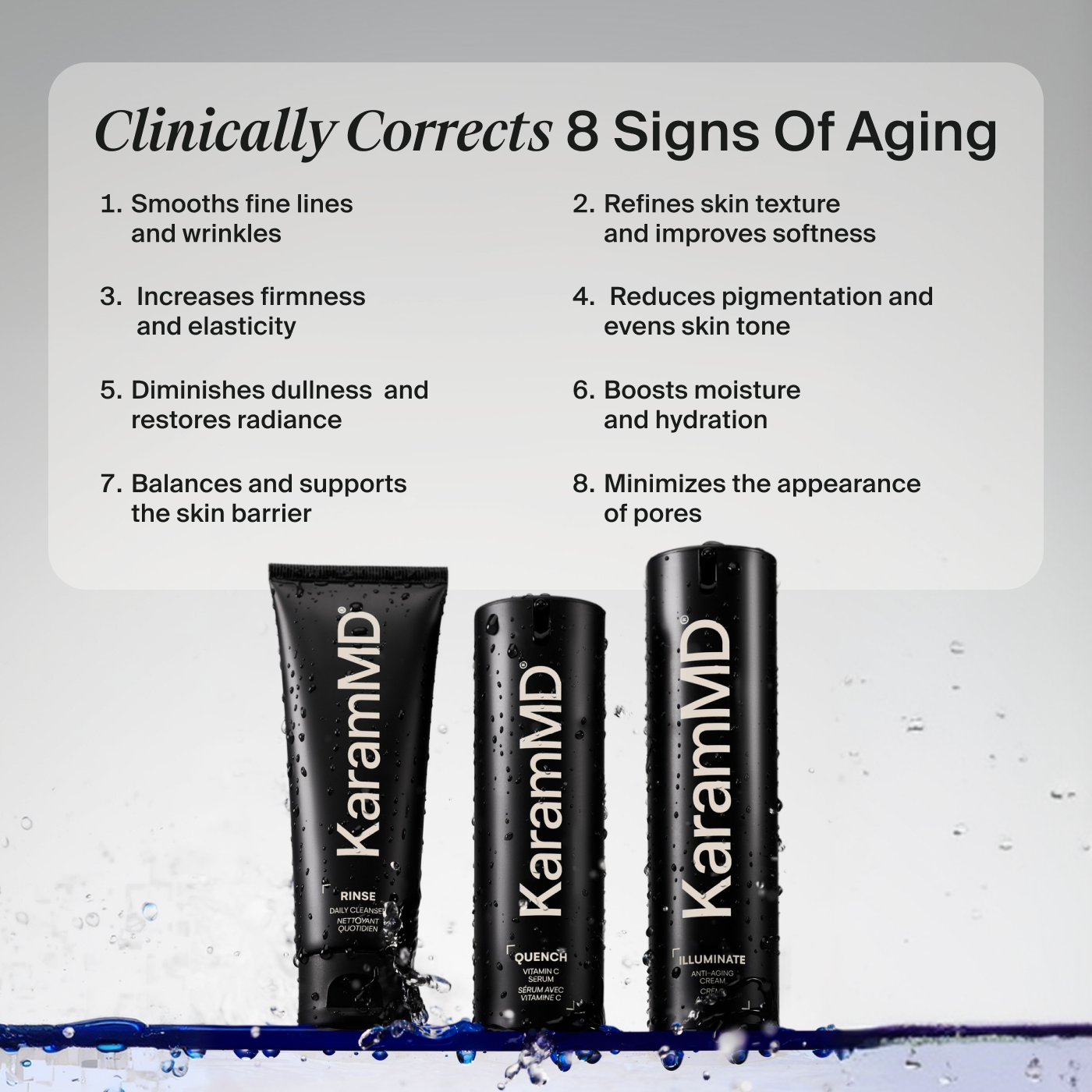
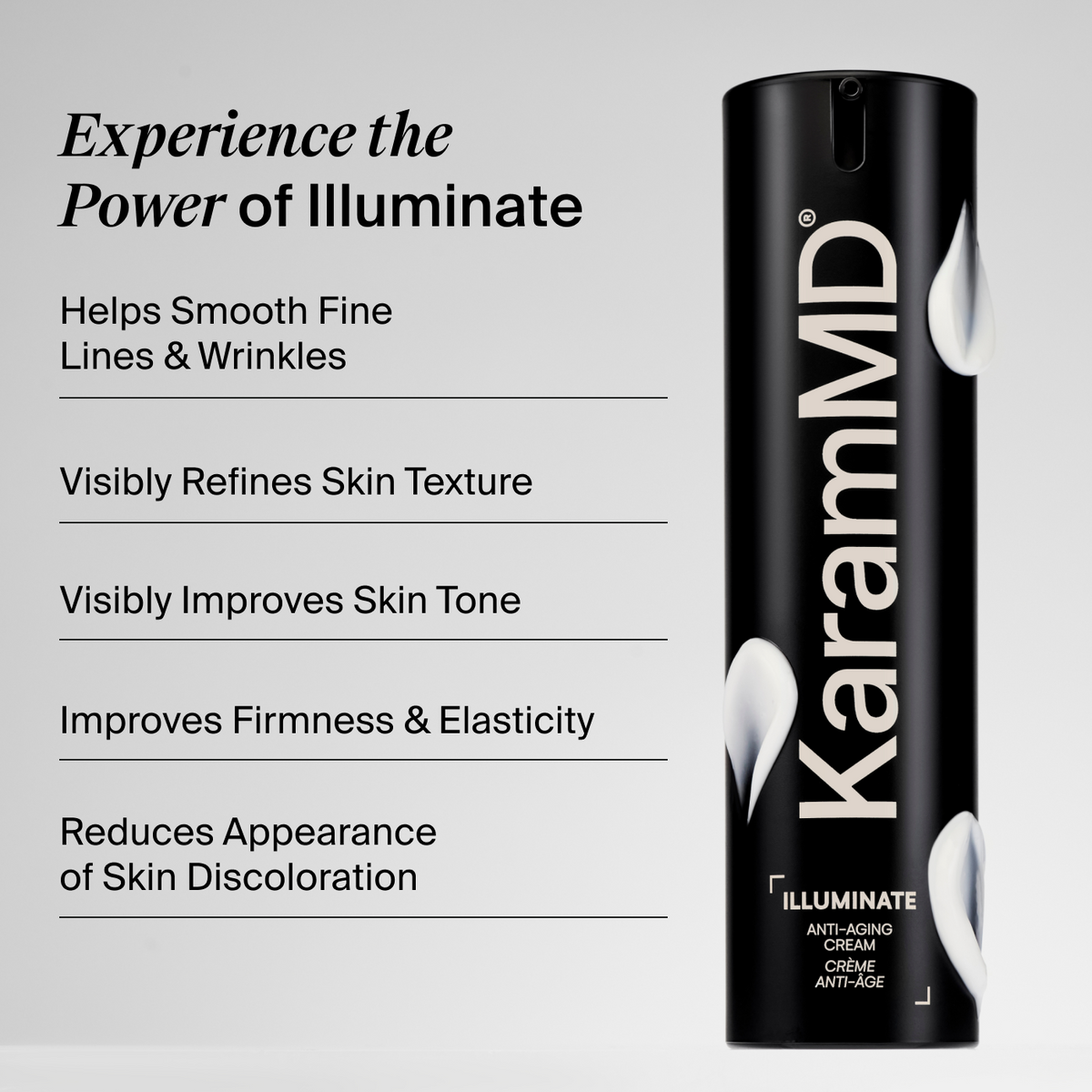
This is also one of the reasons I developed KaramMD Skin and the Trifecta routine.

Throughout my career, I’ve seen firsthand how much better skin can look when people consistently use effective ingredients and protect themselves from sun damage. But I’ve also seen how complicated routines and overly aggressive products can make that consistency difficult.

My goal was to create a comprehensive skincare routine that addresses the multiple signs of skin aging while remaining simple enough and well tolerated enough for people to use every day. Because ultimately, consistency is what allows the benefits of skincare to accumulate over time.

And Jamie is a wonderful example of what years of good skin care can look like.

When we restored her facial shape surgically, we weren’t trying to compensate for severely damaged skin. We were combining a more youthful facial shape with skin that had already been beautifully preserved.

That’s an incredibly powerful combination.

What Jamie’s Recovery Was Really Like

One of the things I appreciated about Jamie’s interview with People was how openly she discussed her recovery.

Although she experienced relatively manageable postoperative pain, she was very clear that the first week was challenging.

There was swelling, bruising, stitches, difficulty sleeping, and the emotional experience of looking in the mirror and seeing a face that temporarily looked very different.

As she told People, “It was really hard.”

And I think that’s important for prospective patients to understand.

Pain and recovery aren’t necessarily the same thing. 

You can have relatively little pain and still find the early healing process uncomfortable and emotionally challenging.

Typically, the first week is when swelling and bruising are most noticeable. By approximately two weeks, most patients are looking and feeling considerably better and can begin returning to many of their normal social activities.

But healing doesn’t stop there. Residual swelling gradually improves over the following months, and the results continue to become more refined.

By four months, Jamie had reached a point where we could really appreciate the beautiful changes in her face.

The Final Result: Looking Like Herself, Only Younger

When you compare Jamie’s before-and-after photographs, the changes are remarkable.

  • Her face has regained a more youthful, heart-shaped appearance
  • The heaviness along her jawline has disappeared
  • Her cheeks are back in a higher position 
  • Volume restoration has softened the areas around her eyes and lower face

But what makes the result particularly beautiful is that none of those changes look artificial.

She doesn’t look pulled, stretched, or overfilled. She looks like Jamie.

And because her skin was already so healthy, the restored facial contours are complemented by the beautiful luminosity that we associate with youthful skin.

I often talk about the way light reflects off healthy skin. People call it a glow, but what we’re really appreciating is the smoothness, hydration, and uniformity of the skin surface.

When you combine that with youthful facial shape, the overall effect can be remarkable.

But what matters most to me isn’t whether someone thinks Jamie looks 35, 40, or any other particular age.

It’s that she looks natural, feels comfortable with her appearance, and recognizes herself when she looks in the mirror.

Jamie was so happy with her experience that she even joked in her People interview that I couldn’t retire anytime soon because she might need me again.

I love that. It captures her personality and how much her perspective on facial rejuvenation has changed.

The Key To Looking As Young As You Feel

Jamie’s story illustrates something I wish more people understood about facial aging.

It’s not simply about wrinkles, sagging skin, or losing volume. It’s about how all these changes work together to gradually alter the face we recognize as our own.

And the best approach isn’t necessarily to do more. It’s to understand exactly what has changed and address those changes in the most appropriate way.

For Jamie, that meant restoring facial shape with Vertical Restore, replacing volume selectively with fat transfer, and preserving the beautiful skin she had spent decades taking care of.

The result is a younger-looking version of herself, without changing the features that make her recognizable. And that’s ultimately what I want for every patient.

Not to look like someone else, but to look as young as they feel.

Frequently Asked Questions

Can someone really look 20 years younger after a facelift?
A well-planned facelift can create a significant improvement in facial appearance, particularly when tissue descent is a major contributor to aging. However, results vary depending on anatomy, skin quality, and the procedures performed. The goal should be natural rejuvenation rather than achieving a specific numerical age.

Why can’t skincare eliminate jowls and sagging cheeks?
Skincare primarily improves the quality and appearance of the skin. Jowls and sagging cheeks result largely from changes in deeper facial tissues that topical products cannot reposition. This is why skincare and surgery address different aspects of aging.

Does everyone need fat transfer with a facelift?
No. Fat transfer is appropriate when volume loss contributes to an aged appearance. The amount and placement should be individualized. In some areas, lifting the descended tissues restores enough fullness that additional volume isn’t necessary.

How long does recovery from Vertical Restore take?
Most patients experience the greatest swelling and bruising during the first one to two weeks. Many feel comfortable returning to social activities around two weeks, although recovery varies. Residual swelling can take several months to resolve, and the final result continues to refine over time.

Does good skin quality make facelift results better?
Healthy, well-preserved skin can significantly complement surgical rejuvenation. A facelift restores facial shape, while skin quality contributes to the smoothness, luminosity, and overall youthful appearance of the face. Both are important.

What can I do now to help my skin age better?
Consistent sun protection, a comprehensive and tolerable skincare routine, avoiding smoking, and maintaining healthy lifestyle habits are excellent starting points. You cannot prevent every aspect of aging, but you can influence how well your skin ages.

Leave a comment

All comments are moderated before being published.

This site is protected by hCaptcha and the hCaptcha Privacy Policy and Terms of Service apply.

Amir Karam MD

Board Certified Facial Plastic Surgeon
Founder / Creator of KaramMD Skin

Dr. Amir Karam is a world-renowned facial plastic surgeon specializing in facial and skin rejuvenation. With over two decades of experience, he has helped countless patients achieve a naturally youthful, refreshed appearance. As an innovative surgeon, researcher, textbook author, and speaker, he is a leading authority in his field. Beyond performing surgical procedures that restore a youthful facial shape, he emphasizes the importance of skin quality, ensuring a comprehensive approach to facial rejuvenation. As the founder of KaramMD Skin, he is dedicated to making advanced skincare simple, effective, and accessible—helping you look as young as you feel.