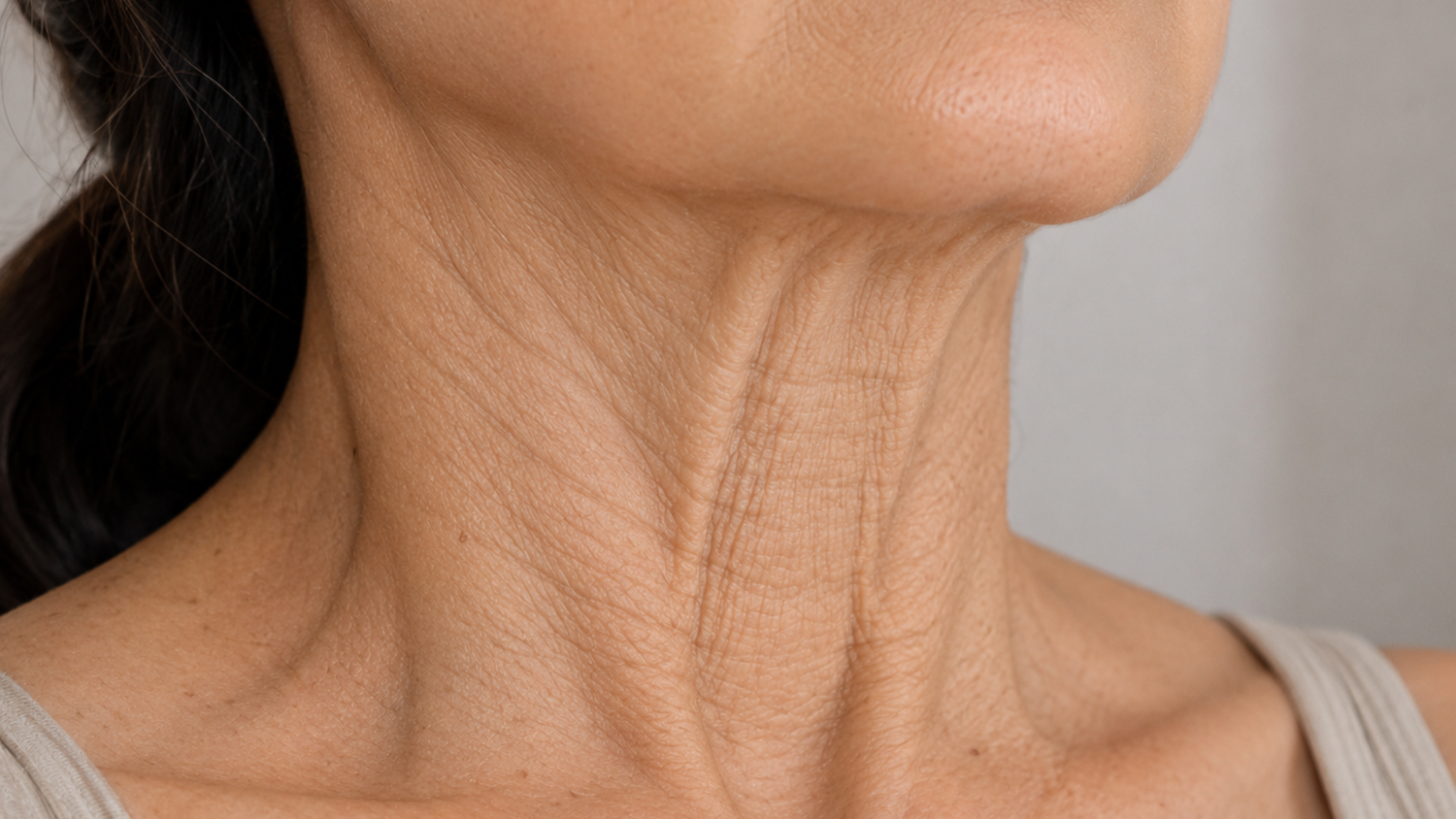
Why Neck Skin Ages Faster Than Your Face & How to Treat Crepey Skin

Why Neck Skin Ages Faster Than Your Face & How to Treat Crepey Skin

Written by Founder, Amir Karam MD

Quote Icon

If I asked you which part of your face or body tends to reveal your age first, many people would probably answer the eyes. But after more than two decades as a facial plastic surgeon, I would argue there’s another area that often gives away your age even sooner. Your neck.

It’s one of the most common concerns I hear from patients. They tell me they avoid wearing certain clothes, they crop photos, or they catch themselves staring at their neck in the mirror instead of their face. They describe it as “crepey,” “thin,” “wrinkled,” or “loose,” and they want to know which cream, laser, or procedure will fix it.

The problem is that “crepey neck skin” isn’t a diagnosis. It’s simply a description. And until you understand why your neck looks crepey, it’s almost impossible to choose the right treatment. Some people have thinning, sun-damaged skin. Others have loose skin caused by aging beneath the surface. Many have both. Treating one problem while expecting it to solve the other often leads to disappointment and frustration.

One of the themes you’ll notice throughout my educational resources and articles is that successful facial rejuvenation always begins with the correct diagnosis. The neck is no different.

Once you understand what’s actually happening beneath the surface, the path forward becomes much clearer.

Why Your Neck Ages Differently Than Your Face

One reason neck aging can feel so frustrating is that the skin on your neck simply isn’t the same as the skin on your face.

  • Neck skin is naturally thinner
  • Neck area contains fewer oil glands
  • The neck has less collagen to begin with
  • Your neck spends decades bending, twisting, and stretching every time you turn your head, look down at your phone, or sleep in the same position night after night.

And despite all of this, it’s one of the most neglected areas of the body.

People spend years applying sunscreen to their face every morning but stop at the jawline. They invest in vitamin C serums, retinoids, facials, and lasers for their face while their neck receives little or no attention. Even people who are diligent about skincare often forget that the neck is aging right alongside the face. Over time, those small daily habits begin to show.

One of the things I frequently notice during consultations is that a patient’s face may look ten or even twenty years younger than their neck. They’ve faithfully cared for their facial skin for years, but the neck was unintentionally left behind. By the time they notice the difference, restoring that lost skin quality becomes much more challenging.

That’s because, unlike the face, the neck can’t always tolerate the same aggressive treatments. Its thinner, more delicate skin limits how aggressively we can use lasers, chemical peels, and resurfacing procedures. Prevention becomes far more valuable because restoration has its limits.


What Causes Crepey Neck Skin?

Although patients often use the term “crepey neck” as if it’s a single condition, several different processes are usually occurring at the same time.

01.

Collagen Loss

The biggest contributor is the gradual loss of collagen and elastin.

Collagen is the structural protein that gives skin its firmness and resilience. Beginning in our thirties, collagen production naturally slows, and every decade that follows, our skin becomes a little thinner and less elastic. Sun exposure, smoking, chronic inflammation, poor nutrition, and environmental stress accelerate this process even further.

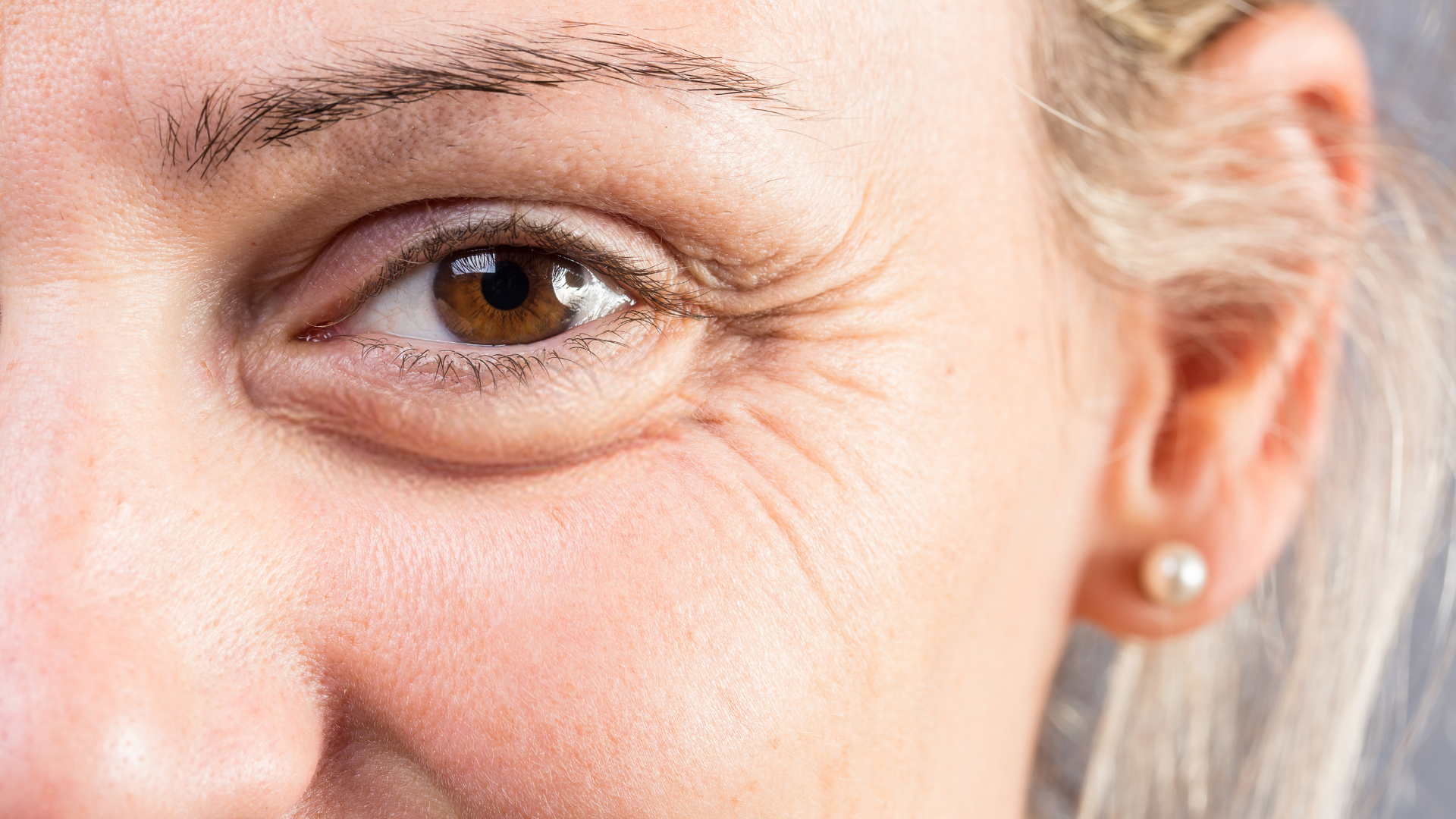
As collagen disappears, the skin begins to lose its smooth, youthful texture. Instead of reflecting light evenly, it develops the fine wrinkled appearance we describe as crepey.

02.

Sun Damage

If I had to choose one lifestyle factor that most dramatically affects neck skin, it would be chronic sun exposure.

I’ve treated countless patients who spent decades playing tennis, golfing, gardening, hiking, or simply enjoying life outdoors. Many protected their face but rarely extended that same protection to their neck. Years later, they often arrive with neck skin that has become remarkably thin, fragile, and inelastic.

Unfortunately, once that level of damage develops, there are limits to what even the best surgery can accomplish.

One of the hardest conversations I sometimes have is explaining that while a Vertical Restore facelift can reposition descended tissues and dramatically improve the jawline and neck contour, it cannot replace collagen that has been lost over decades of ultraviolet damage.

Skin quality still matters. In fact, it’s one of the biggest factors determining just how youthful someone’s final result can appear.

Patients who have consistently protected and cared for their skin often heal beautifully, and their neck truly looks youthful after surgery. Patients with severely sun-damaged, paper-thin skin can still achieve meaningful improvement, but the quality of the skin itself becomes the limiting factor rather than the operation. That’s why I encourage patients to think about skin health long before they ever think about surgery.

03.

Dehydration

One of the most common misconceptions is that crepey neck skin simply means your skin is dry. While dehydration can certainly make fine lines and wrinkles more noticeable, it isn’t usually the primary problem. True crepey skin reflects changes deeper within the skin—primarily the gradual loss of collagen and elastin that provide structure and support. 

Moisturizers play an important role by improving hydration and strengthening the skin barrier, but they can’t replace collagen that’s been lost over time. That’s why the most effective approach combines hydration with ingredients and treatments that actually stimulate new collagen production.

04.

Genetics

Genetics absolutely influence how our neck ages.

Some people naturally produce more collagen. Others inherit thinner skin or lose elasticity earlier in life. While we can’t change our genes, we can influence how those genes express themselves over decades.

Preventing collagen loss is almost always easier than trying to rebuild it after it’s gone.

The good news is that neck aging isn’t an all-or-nothing problem. While prevention is always easier than restoration, there are excellent treatments available at every stage of the aging process. The key is matching the treatment to the problem, before deciding whether you need skincare, collagen-stimulating procedures, or surgery.

Being Proactive is More Effective Than Being Reactive

My wife, Neda, gave me one of my favorite examples of this.

Years ago, she noticed that her mother’s neck had become noticeably thinner and more crepey with age. It wasn’t something anyone pointed out—it was simply an observation that stuck with her. Instead of assuming the same thing would inevitably happen to her, she decided to become proactive while her own skin was still healthy.

She made a conscious decision to treat her neck exactly the way she treated her face.

She has been consistently committed to protecting and preserving her neck it long before it became a problem, and with that, she has been able to change the course of her aging. That’s the lesson I hope every patient takes away.

Why Neck Skin Is So Difficult to Restore

One reason I place such an emphasis on prevention is because the neck is one of the most challenging areas of the body to treat once significant aging has occurred.

Patients often ask why we can’t just perform the same laser treatment on the neck that we perform on the face. The answer is safety.

While the face can often tolerate more aggressive resurfacing, the neck cannot. Treating the neck too aggressively increases the risk of prolonged healing, pigment changes, delayed wound healing, and even scarring.

That’s why most neck laser treatments are performed using fractionated technology, where only a percentage of the skin is treated during each session, leaving healthy skin between the microscopic treatment zones to speed healing.

The same principle applies to chemical peels. Deep resurfacing procedures that may be appropriate for parts of the face are generally avoided on the neck because the skin simply isn’t built to recover in the same way.

Does that mean improvement isn’t possible? Absolutely not. It simply means that improving neck skin is usually a gradual process rather than a one-time procedure. Patience and consistency almost always outperform aggressive treatment.

Crepey Skin vs. Loose Skin: They’re Not the Same Thing

One of the biggest sources of confusion I see is that patients often use the terms crepey skin and loose skin interchangeably. While they frequently occur together, they’re actually two different problems—and understanding the difference is critical because they require different treatments.

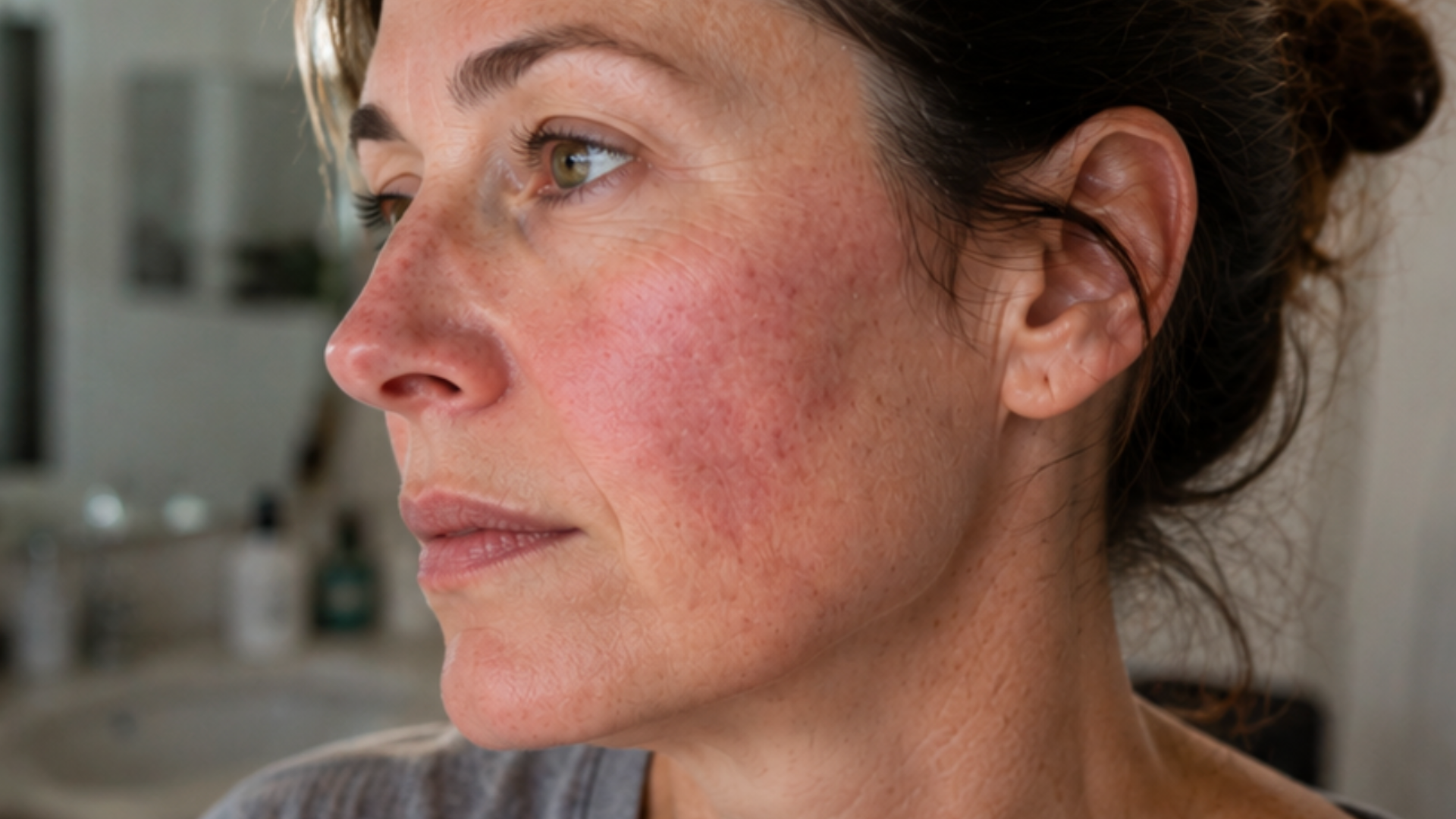
Crepey skin is a skin quality problem. The skin becomes thinner, less elastic, and develops the fine wrinkled appearance that many people describe as looking like tissue paper or crepe.

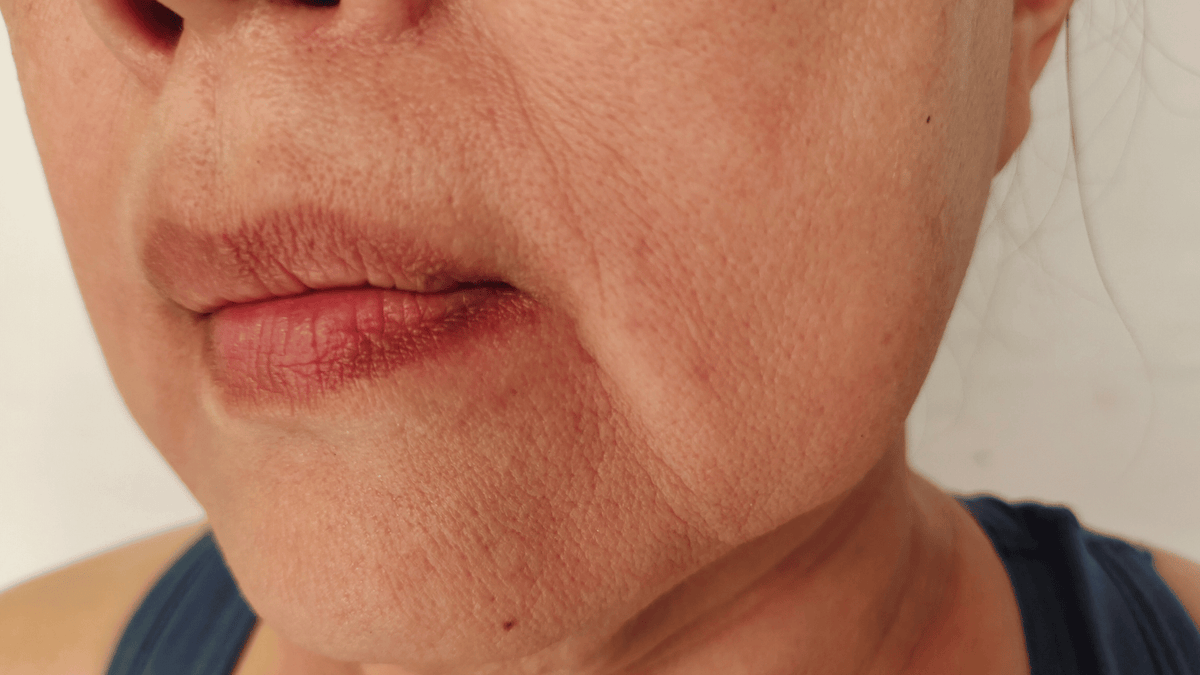
Loose skin, on the other hand, is a structural problem. Over time, gravity, loss of facial support, and changes in the deeper tissues allow the skin to descend and hang. This creates laxity beneath the jawline and along the neck.

The distinction matters because no topical product or collagen-stimulating treatment can remove significant loose skin.

Likewise, surgery can reposition loose tissues beautifully, but it can’t completely erase years of sun damage or restore severely compromised skin quality.

The best results come from treating both problems when they’re present.

My Approach to Preventing and Treating Crepey Neck Skin

Patients often ask me what I would recommend if someone wants to preserve their neck skin for as long as possible.

The answer isn’t a single product or procedure. It’s a long-term strategy.

Step One

Protect Your Collagen

If I could give patients only one piece of advice, it would be this: Treat your neck exactly like your face. Every morning. Every evening. Every single day. That means:

  • Extending your sunscreen below the jawline
  • Applying your skincare products to your neck
  • Protecting your neck against the sun is just as important as your face
  • Consistency is what stimulates collagen over time

One I’ve always emphasized in our practice is that skincare shouldn’t stop at the jawline.

Step Two

Stimulate New Collagen

Even with excellent skincare, collagen production naturally slows with age.

That’s where collagen-stimulating procedures become valuable.

One of my favorite treatments is microneedling because it encourages your body to produce new collagen with relatively little downtime. When performed consistently over the years, it can help preserve skin thickness and elasticity.

Depending on the patient, fractional laser treatments and carefully selected superficial chemical peels can also improve texture, pigmentation, and collagen production. Because neck skin is more delicate than facial skin, these treatments must be performed thoughtfully and often more conservatively than they would be on the face.

Step Three

Always Treat the Face and Neck Together

The neck isn't an afterthought in facial rejuvenation. It's an equal partner to the face, and treating one while neglecting the other almost always leads to an incomplete result. This philosophy influences everything we do in our practice.

Whether someone is undergoing microneedling, laser resurfacing, chemical peels, or surgery, we don’t treat the face while ignoring the neck.

People don’t experience aging one body part at a time. Your face and neck are seen together every time someone looks at you. That’s why we approach facial rejuvenation as a comprehensive process rather than a collection of individual procedures.

The Neck Tells The Story

One of the biggest lessons I’ve learned after thousands of facial rejuvenation procedures is that the neck often tells the story of how well someone has cared for their skin over a lifetime.

Crepey neck skin doesn’t develop because of one event, and there isn’t a single treatment that reverses it. It’s the result of decades of collagen loss, sun exposure, genetics, and everyday habits.

The encouraging news is that there’s a lot you can do to influence that process.

  • Protect your neck from the sun.
  • Treat it with the same daily actives and consistency as your face.
  • Stimulate collagen before it’s gone rather than trying to rebuild it after years of neglect.
  • If loose skin eventually develops, understand that improving skin quality and restoring facial structure are complementary.

I’ve always believed that successful facial rejuvenation starts with making the right diagnosis. The same principle applies to your neck.

When you understand what’s actually causing the aging, choosing the right treatment becomes much simpler—and your results become much better.

Five Myths About Crepey Neck Skin

Myth #1: A neck cream can tighten loose skin. Skincare can improve skin quality and stimulate collagen, but it cannot remove significant skin laxity. Loose skin is a structural problem that often requires surgery.

Myth #2: My neck will age the same way as my face. Not necessarily. Neck skin is thinner, more delicate, and often receives far less protection over the years.

Myth #3: If I only wear sunscreen on my face, that’s enough. The neck receives substantial ultraviolet exposure and should be protected every day, just like the face.

Myth #4: One laser treatment can reverse years of neck aging. Meaningful improvement usually requires multiple treatments combined with excellent daily skincare and ongoing collagen stimulation.

Myth #5: It’s too late to improve crepey neck skin. While prevention is always easier than restoration, it’s rarely too late to improve skin quality. The key is having realistic expectations and choosing treatments that match the underlying problem.

Amir Karam MD

Board Certified Facial Plastic Surgeon
Founder / Creator of KaramMD Skin

Dr. Amir Karam is a world-renowned facial plastic surgeon specializing in facial and skin rejuvenation. With over two decades of experience, he has helped countless patients achieve a naturally youthful, refreshed appearance. As an innovative surgeon, researcher, textbook author, and speaker, he is a leading authority in his field. Beyond performing surgical procedures that restore a youthful facial shape, he emphasizes the importance of skin quality, ensuring a comprehensive approach to facial rejuvenation. As the founder of KaramMD Skin, he is dedicated to making advanced skincare simple, effective, and accessible—helping you look as young as you feel.

3 comments

Louise Randle

I cannot do Anybotox as I have developed anti bodies.
Do you think myobloc will work for me.
I am 65 and starting g too look old.
I am in Canada. So we always go to Florida in the winter months .I was goin to try Myo bloc.
———
KaramMD Skin replied:
Hello Customer Thank you for contacting us. Unfortunately, we are currently closed. Our business hours are Monday through Friday, 9AM to 5PM ET. Your message is important to us and we will respond promtply when we re-open. We appreciate your patience.

MARIANN H GRASELA

Dear Dr. Karam….I’ve been following you for several years now, and really appreciate the good advice you give to people about skin care, and treatments.
I’ve also used your products, and they are every bit as good as you say they are!
And they last a long time also, which is why I haven’t ordered any in a while.
I am 76 yrs old and have a lot of wrinkles around my mouth, and also loose skin on my neck which I hate!
I can upload a picture if you send me a link to get your best recommendation, or make an appointment to see you.
Thank you!
Sincerely,
Mariann Grasela
———
KaramMD Skin replied:
Hello Customer Thank you for contacting us. Unfortunately, we are currently closed. Our business hours are Monday through Friday, 9AM to 5PM ET. Your message is important to us and we will respond promtply when we re-open. We appreciate your patience.

Chika Nwachuku

Thank you, this is very informative. I just turned 65 years ago this past July. And I will say I do not look 65 at all, at least I have been told all the time. However my eye and my neck are the two places that gives my age away easily. I have been using your trifecta (I hope I got the spelling right) for the past 7 to 8 months and I can say I have noticed a good difference in my face. But my eye area and my neck still needs some help. Creepiness is not the main issue with my neck but the thinness and the bands are my problem. My eye area is the hollowness and the creepy skin. And I would love the do face and neck lift with but don’t think I afford cost. Any advice?
———
KaramMD Skin replied:
Hello Customer Thank you for contacting us. Unfortunately, we are currently closed. Our business hours are Monday through Friday, 9AM to 5PM ET. Your message is important to us and we will respond promtply when we re-open. We appreciate your patience.

Leave a comment

All comments are moderated before being published.

This site is protected by hCaptcha and the hCaptcha Privacy Policy and Terms of Service apply.