Why Most Anti-Aging Skincare Routines Are Incomplete

Why Most Anti-Aging Skincare Routines Are Incomplete

Written by Founder, Amir Karam MD

Quote Icon

You can spend hundreds of dollars on skincare, use some of the most scientifically supported ingredients available, and still have a routine that isn't addressing the full picture of skin aging. 

I see this all the time. Someone notices wrinkles, so they buy a retinol. Dark spots appear, so they add a brightening serum. Their skin feels dry, so they reach for a moisturizer. Before long, they've accumulated six or seven products, each intended to solve a different problem. 

The trouble is, your skin doesn't age one problem at a time. 

As a facial plastic surgeon who has spent more than 20 years studying facial aging, I've learned that understanding why your skin changes is just as important as knowing which ingredients to use. 

There are six major biological processes that contribute to skin aging, and together they produce 10 of the most recognizable visible signs. 

These processes overlap, influence one another, and often require more than one approach to address effectively. Once you understand this, the way you think about skincare changes. 

The 6 Biological Causes of Visible Skin Aging 

Skin aging is more complicated than simply losing collagen or developing wrinkles. While genetics and time certainly play a role, environmental exposure and changes in skin biology contribute to what we eventually see in the mirror. 

I like to organize these changes into six major processes: 

  • Collagen and elastin decline. These structural proteins give skin its strength, firmness, and elasticity. As they decline, skin becomes less resilient and wrinkles become more noticeable. 
  • Slower cell turnover. Skin renews itself less efficiently, allowing dead cells to accumulate and contributing to roughness, uneven texture, and dullness. 
  • Barrier dysfunction. The protective outer layer becomes less effective at retaining moisture and defending against environmental irritants. 
  • Inflammation and oxidative stress. UV exposure, pollution, and other environmental stressors contribute to cellular damage and accelerate visible aging. 
  • Moisture loss. Changes in the skin's ability to attract and retain water contribute to dehydration, reduced plumpness, and more visible fine lines. 
  • Pigment dysregulation. Changes in melanin production and distribution contribute to uneven skin tone, sun spots, and discoloration. 

These aren't six completely independent problems. They are interconnected processes that often reinforce one another. 

For example, environmental damage can accelerate collagen breakdown while also contributing to pigmentation changes. Barrier dysfunction can increase moisture loss and irritation. Slower cell turnover can make both texture and discoloration more noticeable. 

That's why focusing on one ingredient or one visible concern often leaves important aspects of skin aging unaddressed. 

The 10 Visible Signs of Skin Aging

Although the underlying biology is complex, most of what we notice in the mirror falls into 10 recognizable signs. I find it helpful to group them into five categories because each reveals something about what's happening beneath the surface. 

Loss of Support

01. Visible Fine Lines 
02. Wrinkles 

Some of the most familiar signs of aging are fine lines and wrinkles.

When we're younger, collagen helps our skin maintain its structure and recover from movement. 

As those proteins decline and the skin's supporting matrix changes, you'll likely start seeing more visible lines on your face. 

Retinol is one of the most extensively studied topical ingredients for improving the appearance of fine lines and wrinkles. Vitamin C also helps improve the appearance of fine lines and wrinkles, while also providing antioxidant protection. 

Loss of Structure

03. Visibly Less Firm
04. Loss of Elasticity

The next key visible signs of aging are loss of firmness and loss of elasticity. 

While collagen acts as a structural component, elastin acts as the elastic springs that helps give skin the ability to “snap back”. 

Over time as elastin decreases skin firmness and elasticity also decrease, and skin loses some of its ability to bounce back. 

Similar to fine lines and wrinkles, ingredients like retinol and vitamin C help with the look of skin firmness and elasticity. Some peptides may also help address these common skin concerns.

But there's an important distinction I always emphasize with my patients: improving skin firmness is not the same as lifting a sagging face. 

Skincare can improve the quality of the skin itself, but it cannot reposition descended facial tissues, reverse significant jowling, or restore the deeper structural changes that occur with facial aging. 

That's where my philosophy of skin versus shape comes in. Surgery addresses facial shape and tissue descent. Skincare addresses skin quality. Both are important, but they accomplish different things.

And whether or not someone ever considers surgery, maintaining healthy, resilient-looking skin is one of the best investments they can make in their appearance. 

Loss of Smoothness

05. Visibly Rough Skin 
06. Uneven Texture 

Visibly rough skin & uneven looking skin texture are closely associated with slower skin renewal. As dead skin cells accumulate, the surface becomes less smooth and reflects light less evenly. The result is skin that can look tired, even when you're well rested. 

Ingredients that help with exfoliation and radiance can make a meaningful difference. 

Glycolic acid helps exfoliate accumulated surface cells, while niacinamide helps refine visible skin texture. Hydrating ingredients can improve surface smoothness, and antioxidants and brightening ingredients can help restore a more radiant appearance

But there's a common mistake I see here: people assume that if exfoliation is beneficial, more must be better. It isn't. 

Excessive exfoliation can disrupt the skin barrier, increase irritation, and leave skin looking worse. The objective isn't to force the skin to renew itself as aggressively as possible. It's to support healthy renewal while maintaining the integrity of the skin. 

That balance becomes especially important when you're using several ingredients together. 

Loss of Hydration

07. Dehydration
08. Dull-looking Skin 

Dehydration & dull-looking skin are the next visible signs of aging. Dehydration itself is one of the most misunderstood. 

Hyaluronic acid and glycerin are excellent ingredients for attracting water and helping the skin look plumper and smoother.  It’s important to note that hydration isn't simply about adding water. You also need a healthy barrier to help prevent that water from escaping. 

That's where ingredients such as ceramides, squalane, and other skin-supporting lipids become important. They help maintain the skin's protective barrier and reduce moisture loss. 

This matters even more when using ingredients such as retinol and exfoliating acids, which can cause irritation if the formulation or frequency isn't appropriate. 

I've always believed that efficacy and tolerability have to work together. An ingredient may have impressive scientific evidence, but if your routine leaves your skin chronically irritated, you may not be able to use it consistently enough to benefit. 

Loss of an Even Complexion

09. Uneven Tone
10. Visible Discoloration 

The final two signs are uneven skin tone and discoloration. 

Uneven tone describes the general patchiness or inconsistency of the complexion. Discoloration refers to more concentrated areas of pigmentation, such as sun spots and age spots. Both are influenced by changes in melanin production, accumulated UV exposure, and inflammation. 

What's interesting is that pigmentation isn't controlled by a single biological step. It's a multistage process, which means different ingredients can help influence different parts of it. 

Vitamin C, niacinamide, licorice root, retinol, and certain azelaic acid derivatives can help improve the appearance of skin discoloration through complementary mechanisms. 

This is one of the clearest examples of why combining carefully selected ingredients can be more useful than relying on a single ingredient to do everything.

Of course, none of this replaces daily sun protection. 

Broad-spectrum SPF 30 or higher remains one of the most important tools for preventing premature skin aging. Without it, you're continually exposing your skin to the very damage you're trying to address. 

Why Having the Right Ingredients Isn't Enough 

Now consider what we've covered. 

Ten visible signs. Six underlying biological processes. 

And many of the same ingredients appearing across multiple categories: 

  • Retinol
  • Vitamin C
  • Niacinamide 
  • Peptides
  • Exfoliating acids
  • Antioxidants
  • Hydrating and barrier-supporting ingredients

That's not a coincidence. It's a reflection of how interconnected skin aging really is. 

But understanding which ingredients are beneficial creates another challenge: how do you combine them into an effective daily routine? 

You could purchase six or seven products from different brands, each supported by impressive ingredient research. But that doesn't necessarily tell you how those finished products will perform together. 

They may contain overlapping ingredients, incompatible formulations, unnecessarily high concentrations, or combinations that increase irritation. 

And even if every product is individually well formulated, the routine you've assembled at home probably hasn't been clinically evaluated as a complete system. 

There's a difference between knowing that individual ingredients work and knowing how a finished routine performs when those ingredients are used together. 

That distinction became central to how I approached developing KaramMD Skin. 

Why I Wanted to Test the Complete Skincare Routine 

When I began developing what eventually became the KaramMD Trifecta, I didn't want to create another collection of individual products that people would have to figure out how to combine. 

I wanted to control the process from beginning to end. 

Which ingredients should we use? At what concentrations? How should they complement one another? How could we address multiple aspects of skin aging without creating an unnecessarily complicated or irritating routine? 

And most importantly, how would the finished system actually perform? 

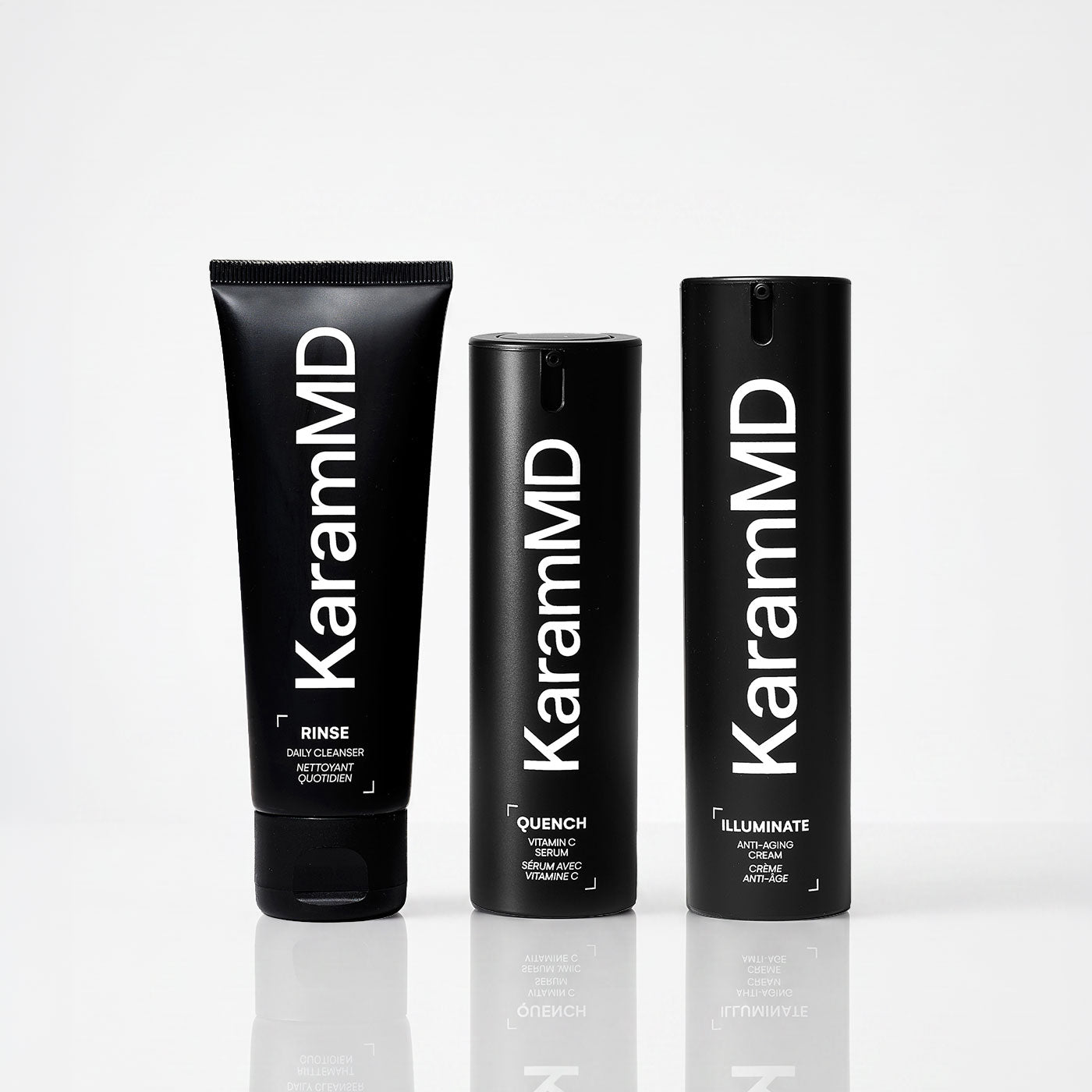
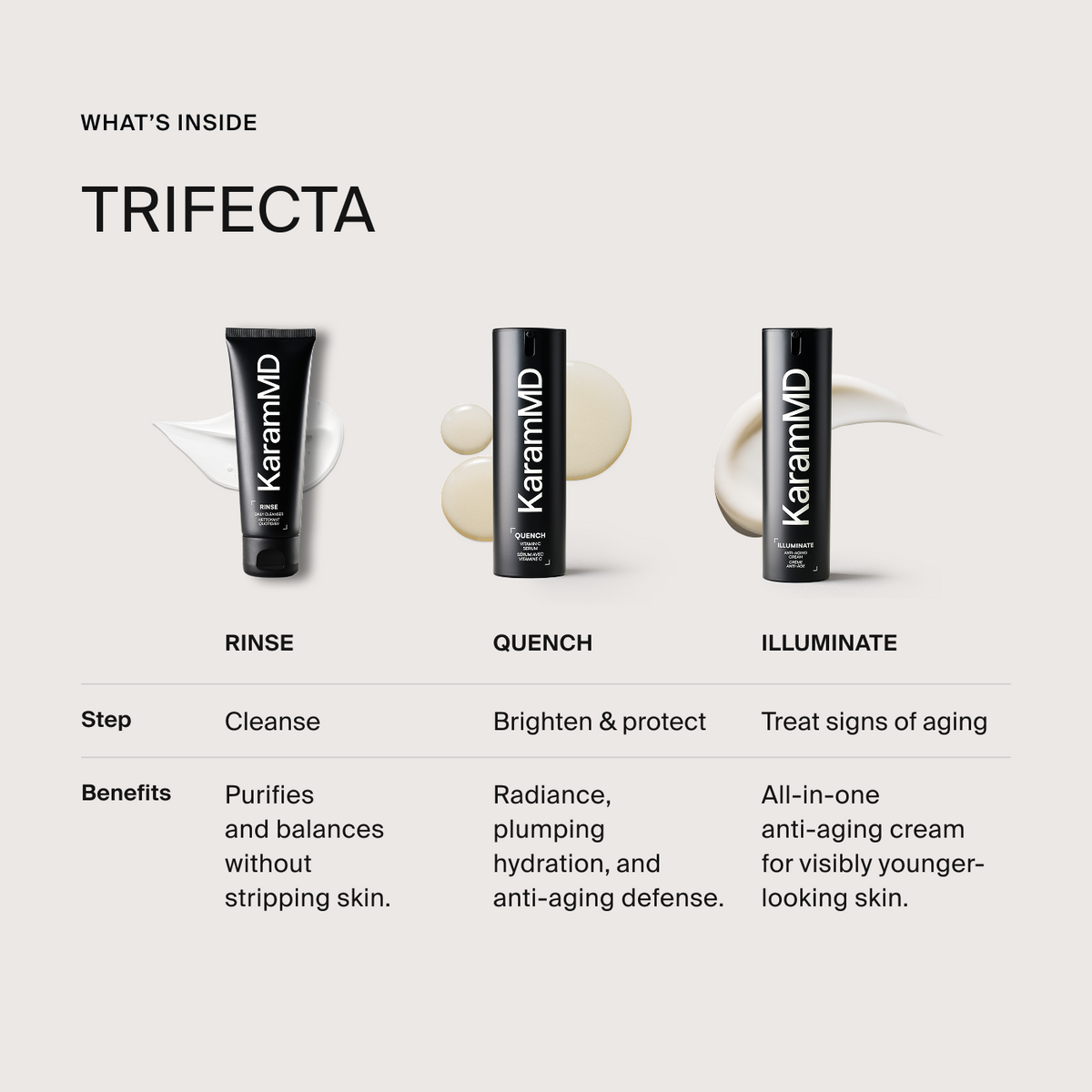
That thinking led to Trifecta: three complementary products containing 36 targeted ingredients. 

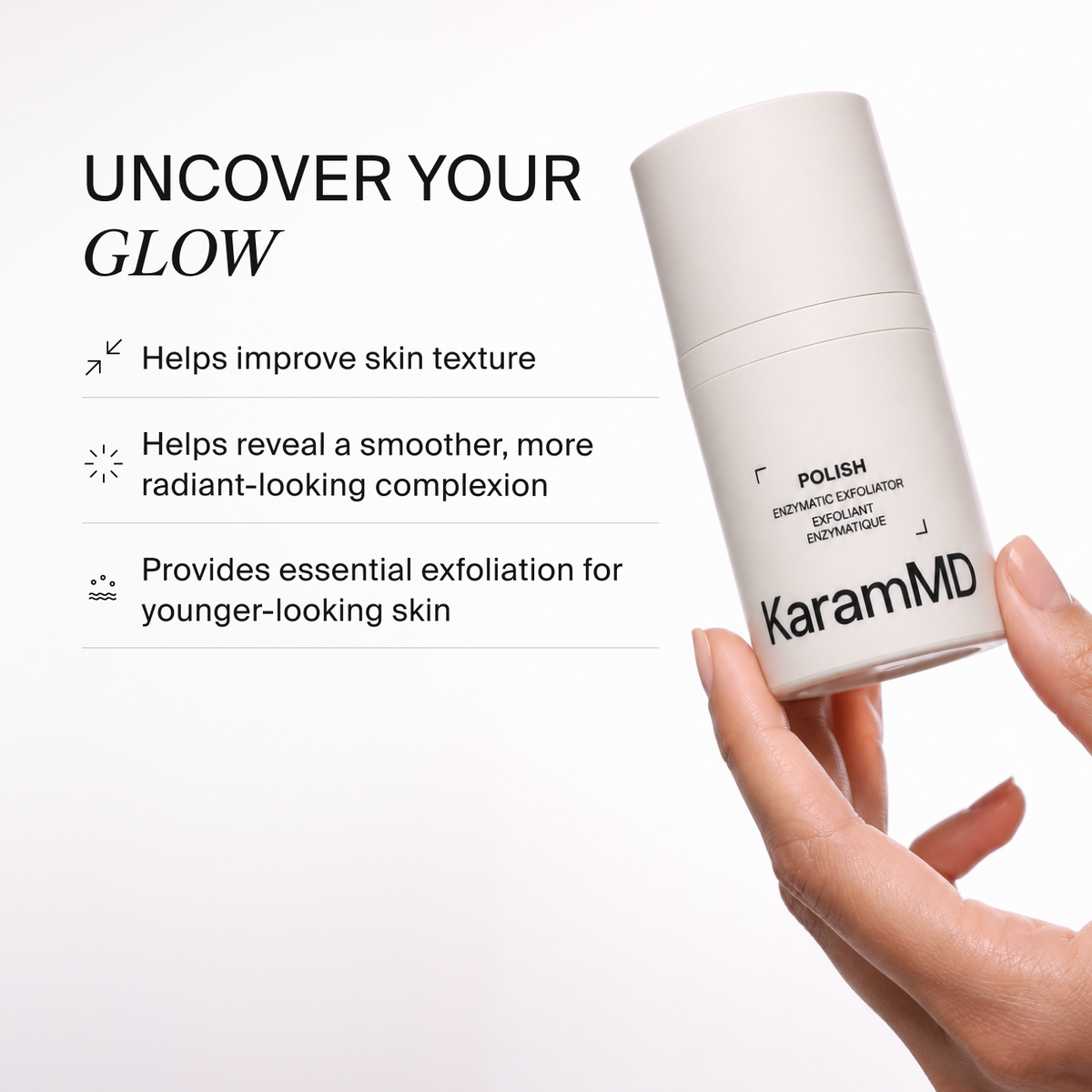
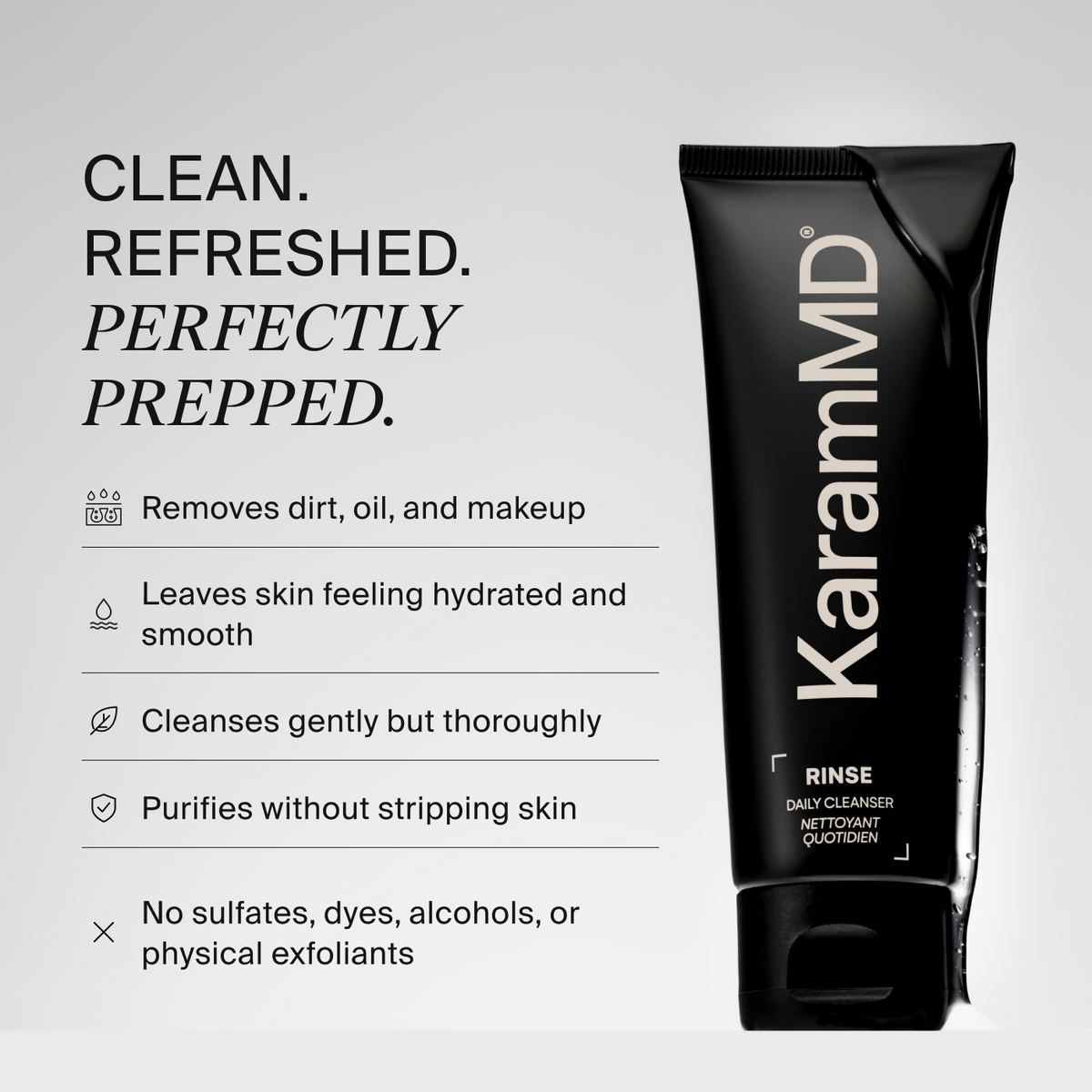
  • Rinse prepares the skin and supports gentle renewal. 
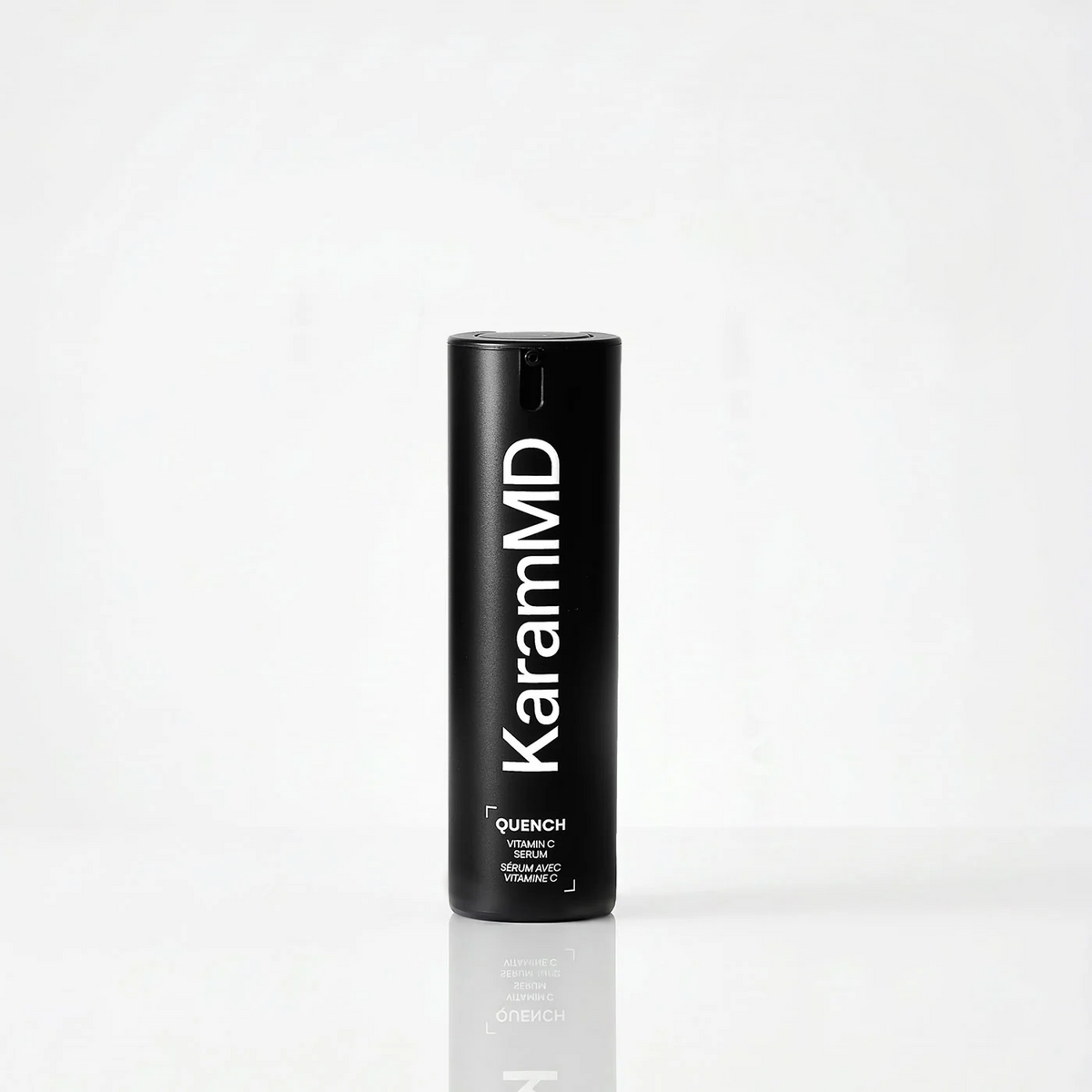
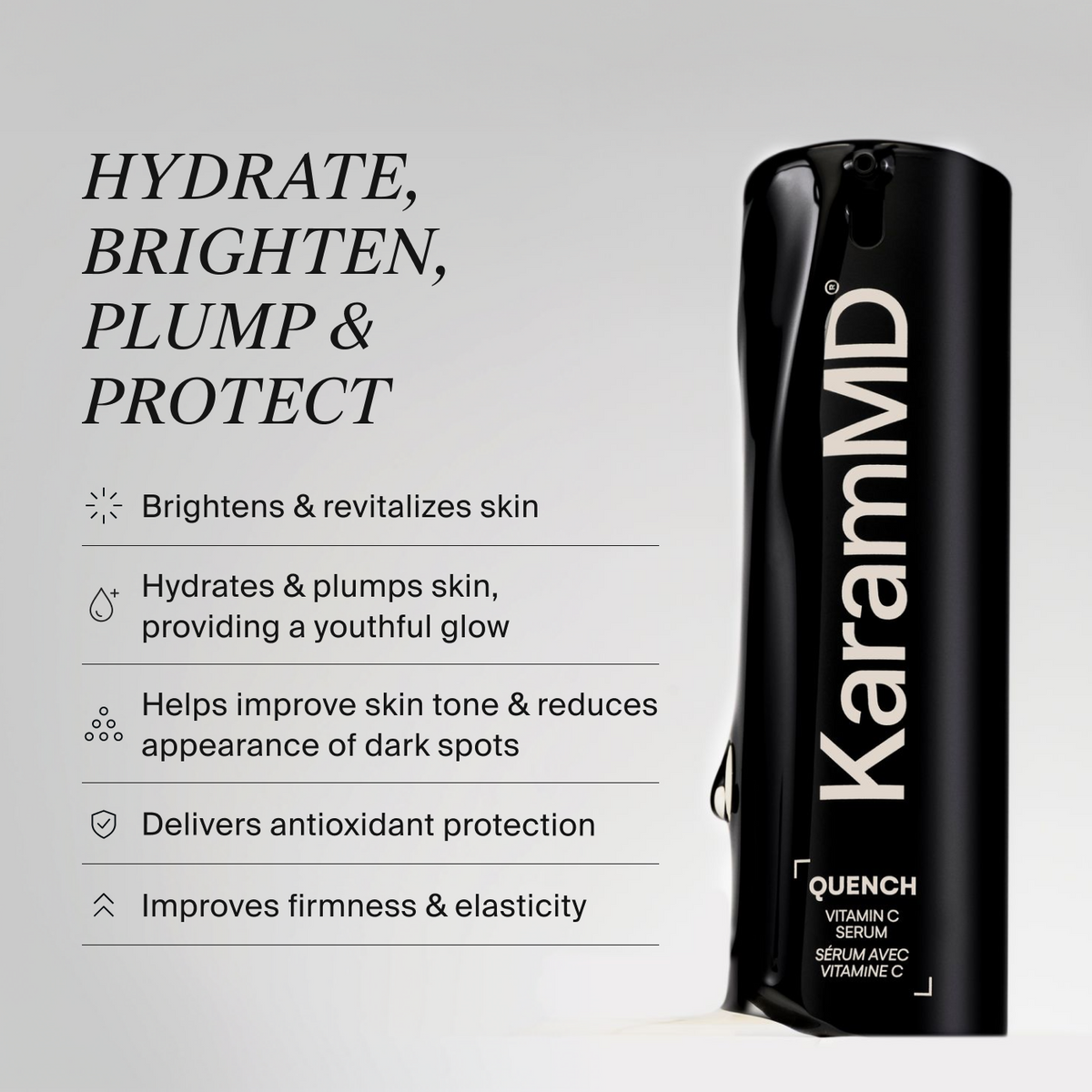
  • Quench provides hydration, antioxidant protection, and brightening support. 
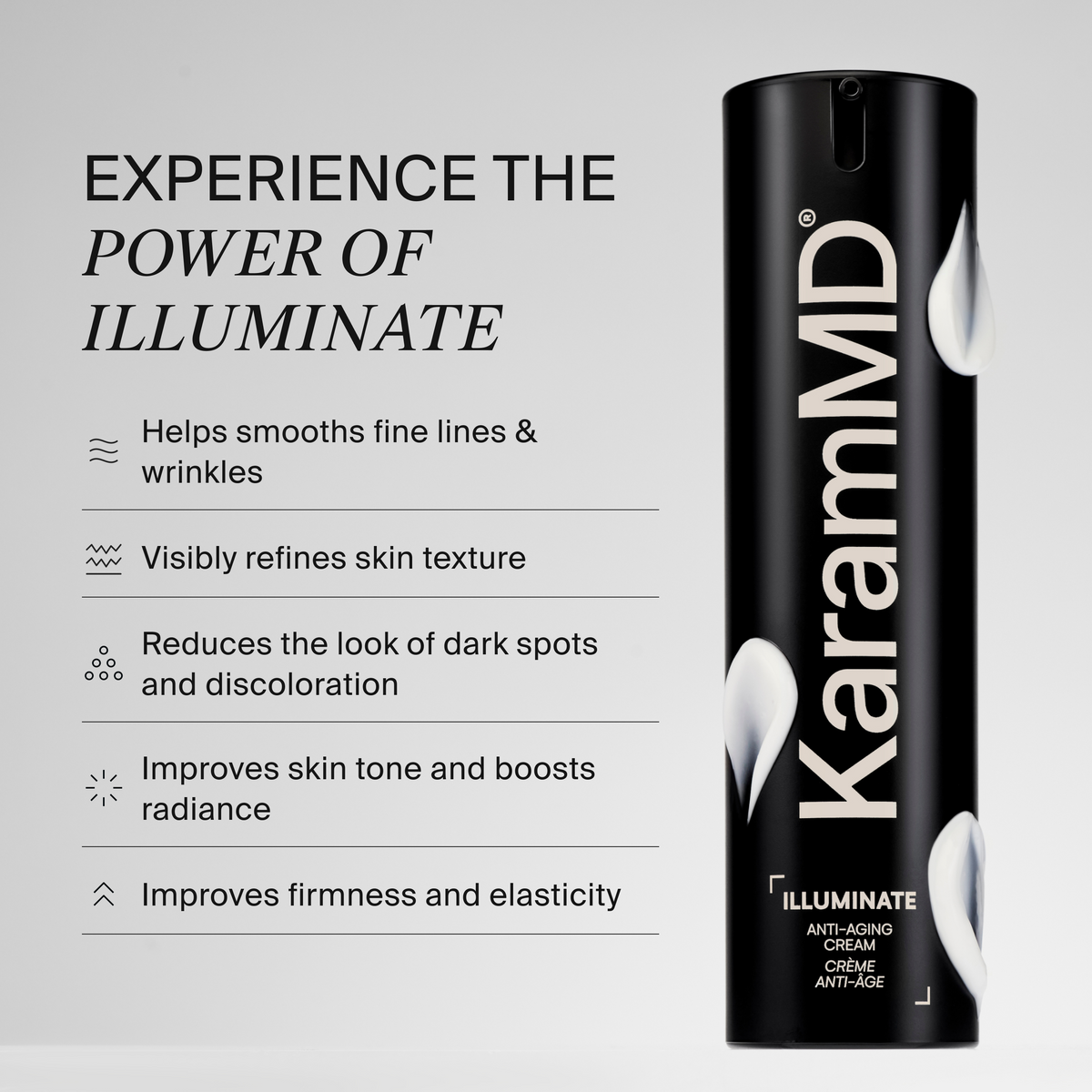
  • Illuminate brings together retinol, peptides, and other complementary ingredients to improve multiple visible signs of aging.  

The formulation philosophy behind this approach is what we call SynerDose: selecting complementary, scientifically supported ingredients at purposeful levels, with the goal of achieving efficacy while maintaining tolerability. 

But I didn't want to stop at the formulation. 

I wanted to test the finished routine itself. 

In an independent eight-week clinical study of Trifecta, we observed measurable improvements across multiple dimensions of skin quality. 

At eight weeks: 

  • 100% of participants showed improvement in fine lines and wrinkles. 
  • 91% showed improvement in skin firmness. 
  • 100% showed improvement in skin moisture. 
  • 65% showed improvement in skin tone. 
  • Participants also reported improvements in the appearance and feel of their skin, with 97% agreeing that the products were non-irritating. 

These results are meaningful to me because we evaluated the complete routine as it was intended to be used, rather than simply extrapolating from studies of individual ingredients. 

To be clear, this was not a comparative trial proving Trifecta is superior to every other skincare routine. That would require a different study design. 

But it did provide evidence of how our finished system performed over eight weeks, which is exactly what I wanted to understand. 

Because ultimately, you're not putting ingredient studies on your face. You're using finished products together, every day. 

Comprehensive Skincare Doesn't Have to Be Complicated

There's one final misconception I want to address. 

When I talk about comprehensive skincare, I don't mean using the greatest number of ingredients or creating the longest possible routine. 

Quite the opposite. 

The objective is to address the important biological processes of skin aging with a thoughtfully designed combination of ingredients, while avoiding unnecessary complexity and irritation. 

A routine that requires 10 steps every morning and evening may sound comprehensive, but if it's too difficult or uncomfortable to maintain, its practical value becomes limited. 

Skin aging develops over years. Improving and maintaining skin quality requires consistency over time. 

That's why I believe the best approach is neither an overly complicated routine nor one that's so minimal it overlooks important aspects of skin aging. 

It's a streamlined, comprehensive approach grounded in science. 

KaramMD Trifecta

$330.00

20% off with subscription

Your skin doesn't age one problem at a time, and your skincare shouldn't approach it that way. 

Fine lines, wrinkles, dullness, dehydration, and discoloration may look like separate concerns, but they're often connected through the same underlying biological processes. 

The goal isn't to buy a new product every time you notice something changing in the mirror. It's to understand the biology of skin aging and build a routine that addresses it comprehensively. 

Choose scientifically supported ingredients. Make sure your skin can tolerate them. Protect yourself from the sun. And most importantly, stay consistent. 

Because when it comes to healthy, youthful-looking skin, the goal isn't more skincare. It's better skincare. 

Amir Karam MD

Board Certified Facial Plastic Surgeon
Founder / Creator of KaramMD Skin

Dr. Amir Karam is a world-renowned facial plastic surgeon specializing in facial and skin rejuvenation. With over two decades of experience, he has helped countless patients achieve a naturally youthful, refreshed appearance. As an innovative surgeon, researcher, textbook author, and speaker, he is a leading authority in his field. Beyond performing surgical procedures that restore a youthful facial shape, he emphasizes the importance of skin quality, ensuring a comprehensive approach to facial rejuvenation. As the founder of KaramMD Skin, he is dedicated to making advanced skincare simple, effective, and accessible—helping you look as young as you feel.

Frequently Asked Questions

What are the six main causes of skin aging? 
Six major biological processes contribute to visible skin aging: collagen and elastin decline, slower cell turnover, skin barrier dysfunction, inflammation and oxidative stress, moisture loss, and pigment dysregulation. These processes interact and contribute to multiple visible signs of aging. 

What are the 10 visible signs of skin aging? 
The 10 visible signs of aging are fine lines, wrinkles, roughness, uneven texture, loss of firmness, loss of elasticity, dullness, dehydration, uneven skin tone, and discoloration. They can be grouped into four major categories: structure, texture and radiance, hydration, and complexion. 

What ingredients should a comprehensive anti-aging skincare routine contain? 
A well-designed routine may include retinoids, antioxidants such as vitamin C, niacinamide, selected peptides, gentle exfoliating ingredients, humectants such as hyaluronic acid, and barrier-supporting lipids. The specific combination, concentrations, formulation, and tolerability matter more than simply including the greatest number of ingredients. 

Can you improve all 10 signs of skin aging with skincare? 
Skincare can improve the appearance of many visible signs of aging, including fine lines, roughness, dullness, dehydration, and uneven pigmentation. However, results vary, and topical products cannot fully reverse significant tissue laxity or structural facial descent. Some concerns require procedural or surgical approaches. 

Is it better to use one comprehensive skincare system or several individual products? 
Either approach can be effective if the products are appropriately formulated and used consistently. A coordinated system can simplify the routine and reduce guesswork. When the complete system has also been clinically evaluated, that provides evidence about its performance as a routine rather than relying exclusively on research about individual ingredients. 

How long does it take to see results from anti-aging skincare? 
Hydration and surface smoothness can improve relatively quickly, sometimes within days. Changes in fine lines, texture, and pigmentation generally require several weeks to months of consistent use. More substantial improvements in skin quality may continue developing over longer periods, depending on the ingredients and individual skin characteristics. 

Leave a comment

All comments are moderated before being published.

This site is protected by hCaptcha and the hCaptcha Privacy Policy and Terms of Service apply.